Technical FAQ
Q1: How do I choose between Intel® Core™ i7, i5, i3, and Celeron® configurations for the ABOX-5200?
A: Processor selection should be based on workload complexity, the number of concurrent applications, video processing requirements, and power considerations. The Core™ i7-8700T provides six cores and is better suited to compute-intensive or highly concurrent workloads, while the Core™ i5 and i3 configurations provide alternatives for moderate processing requirements. The Celeron® option can be considered for lighter control, communication, or data acquisition workloads where lower computing demand is sufficient.
Q2: How can the ABOX-5200 support multiple IP cameras and network devices?
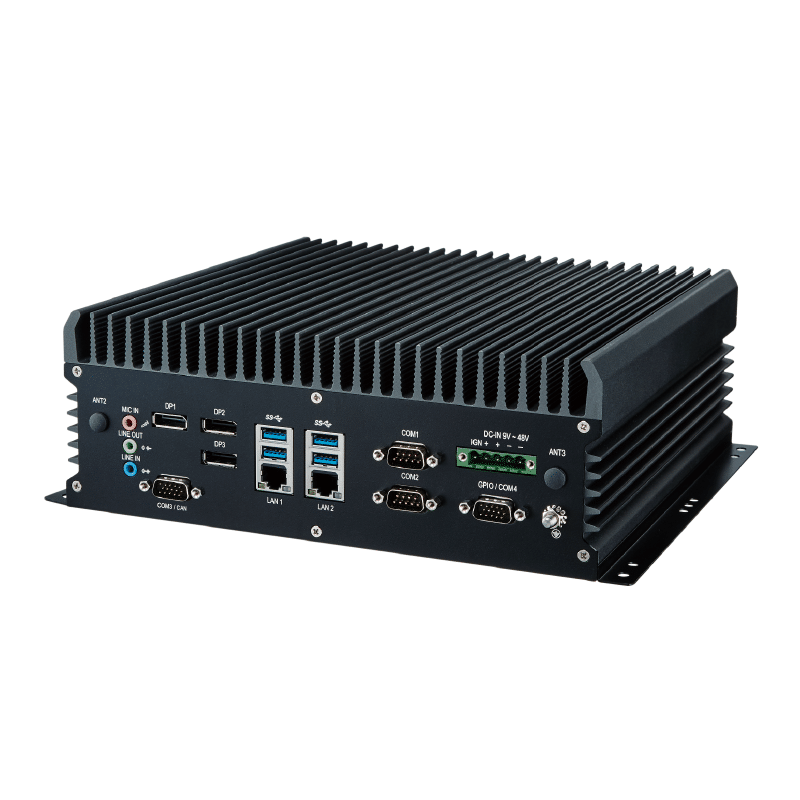
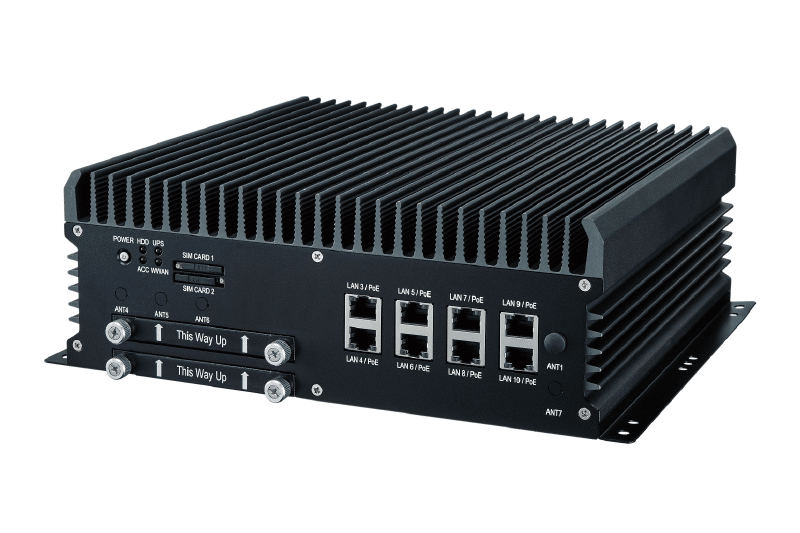
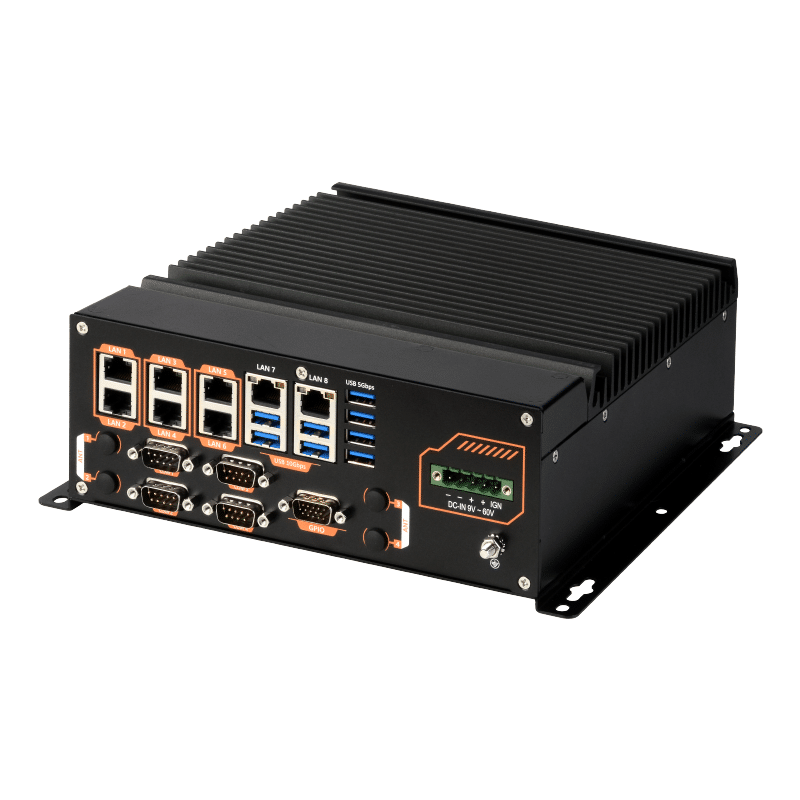
A: The ABOX-5200 provides ten GbE ports, with an optional configuration supporting eight PoE ports and a total PoE power budget of up to 100W. This allows multiple IP cameras, sensors, and other Ethernet devices to connect directly to the system. When designing a multi-camera system, camera resolution, frame rate, codec, aggregate network bandwidth, individual PoE power consumption, storage throughput, and processing load should be evaluated together.
Q3: Can the ABOX-5200 support multiple displays for video monitoring and visualization?
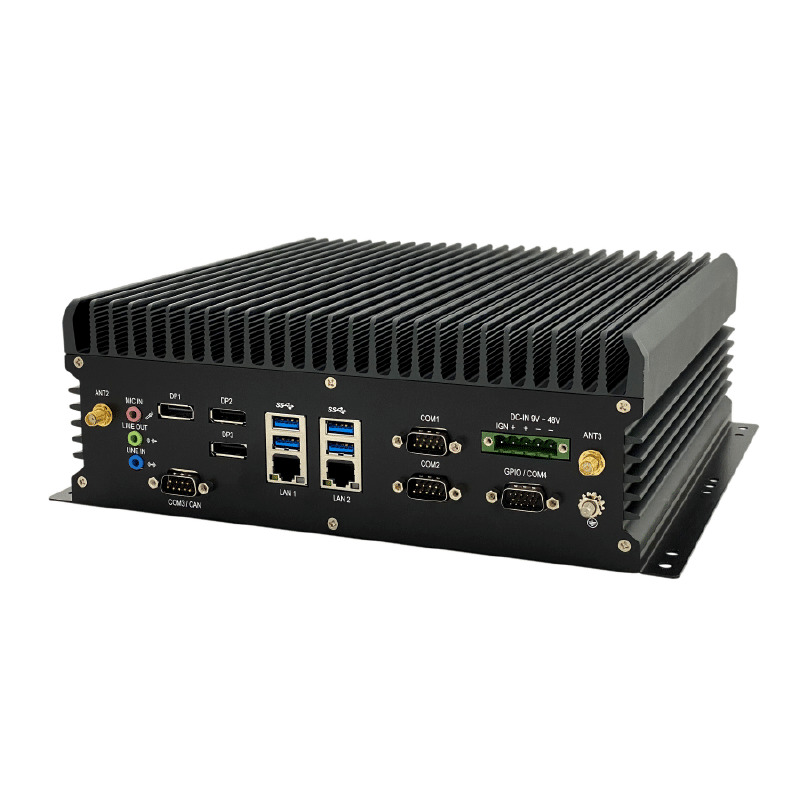
A: Yes. The ABOX-5200 provides three DisplayPort outputs driven by Intel® UHD Graphics 630, with resolutions up to 4096 × 2304 at 60Hz. This enables multiple displays to be used from a single system for applications such as video monitoring, operational dashboards, control interfaces, and other multi-screen visualization environments.
Q4: How should I configure storage for continuous video recording and field data?
A: Storage should be planned according to required capacity, write performance, recording duration, and data-protection requirements. The ABOX-5200 provides two hot-swappable 2.5-inch SATA drive bays plus an mSATA interface, allowing system software and recorded data to be distributed across different storage devices. RAID configuration should be selected according to the required balance between performance, usable capacity, and redundancy.
Q5: How can the ABOX-5200 support mobile connectivity and vehicle data integration?
A: The ABOX-5200 provides three full-size Mini PCIe slots, an M.2 A/E-key slot, and two SIM card sockets for expanding communication and vehicle interfaces. Optional modules can add LTE, Wi-Fi, GPS, or CAN bus connectivity, allowing the system to combine network communication, positioning, and vehicle data within a single computing platform. The required modules should be selected according to the communication interfaces and data sources used in the deployment.