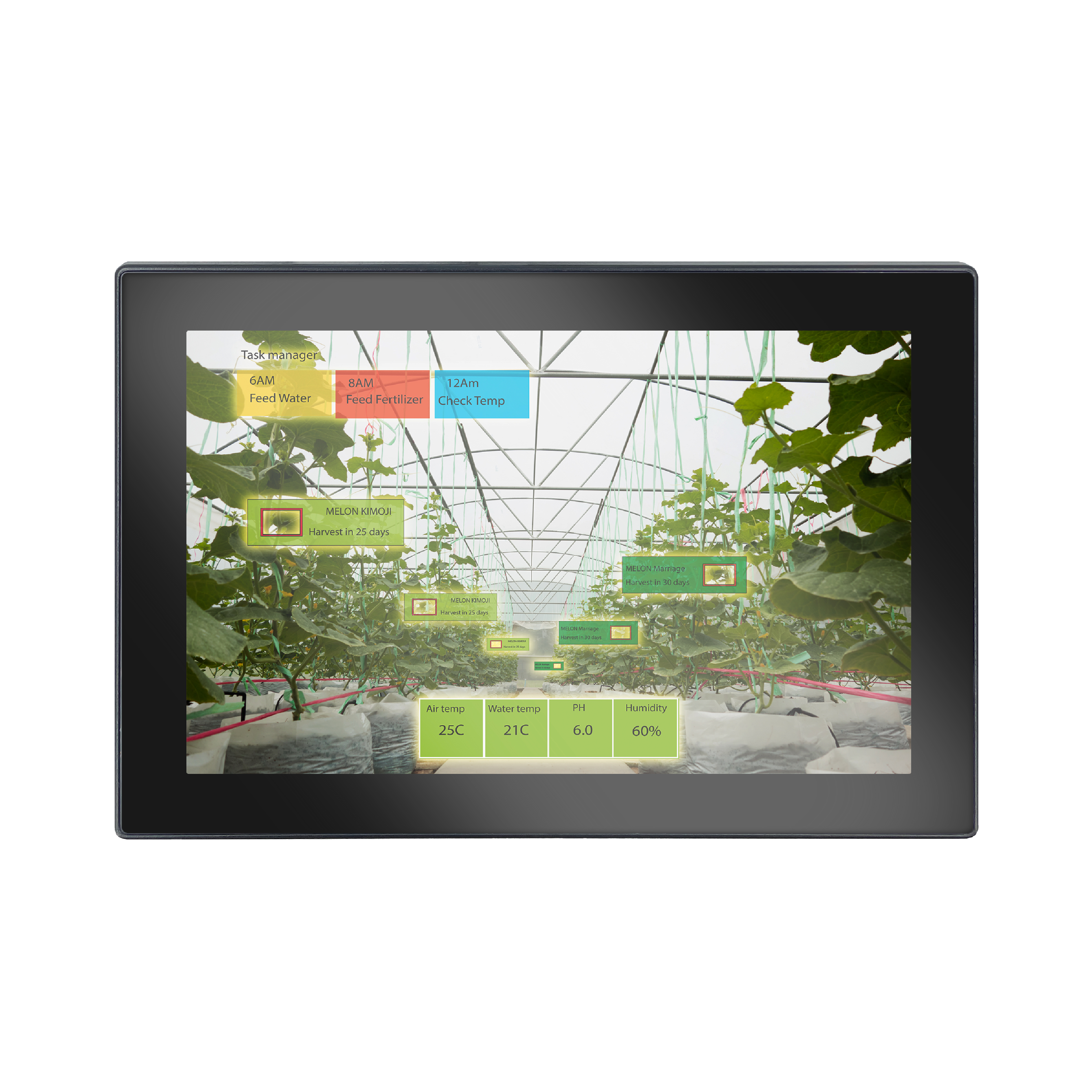
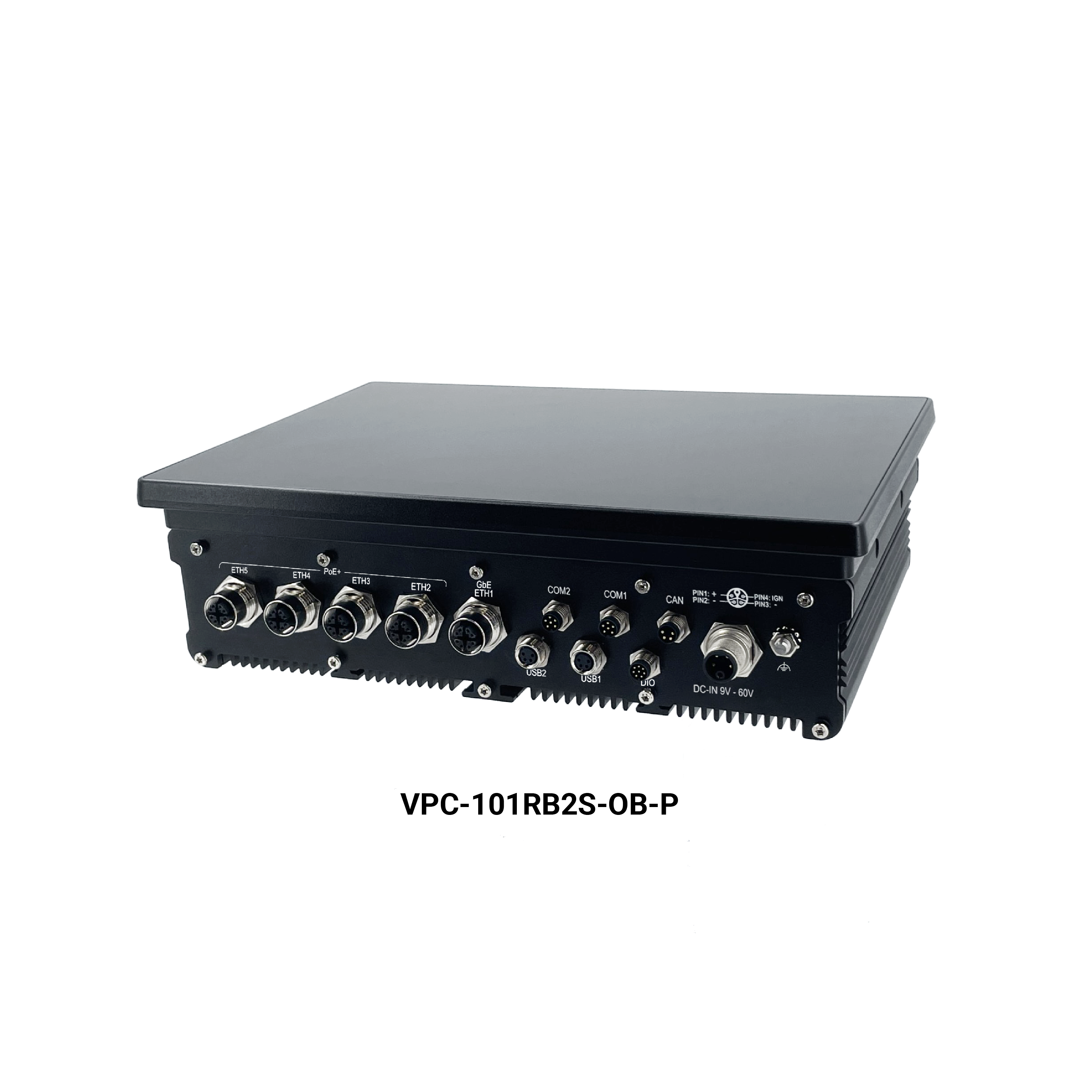
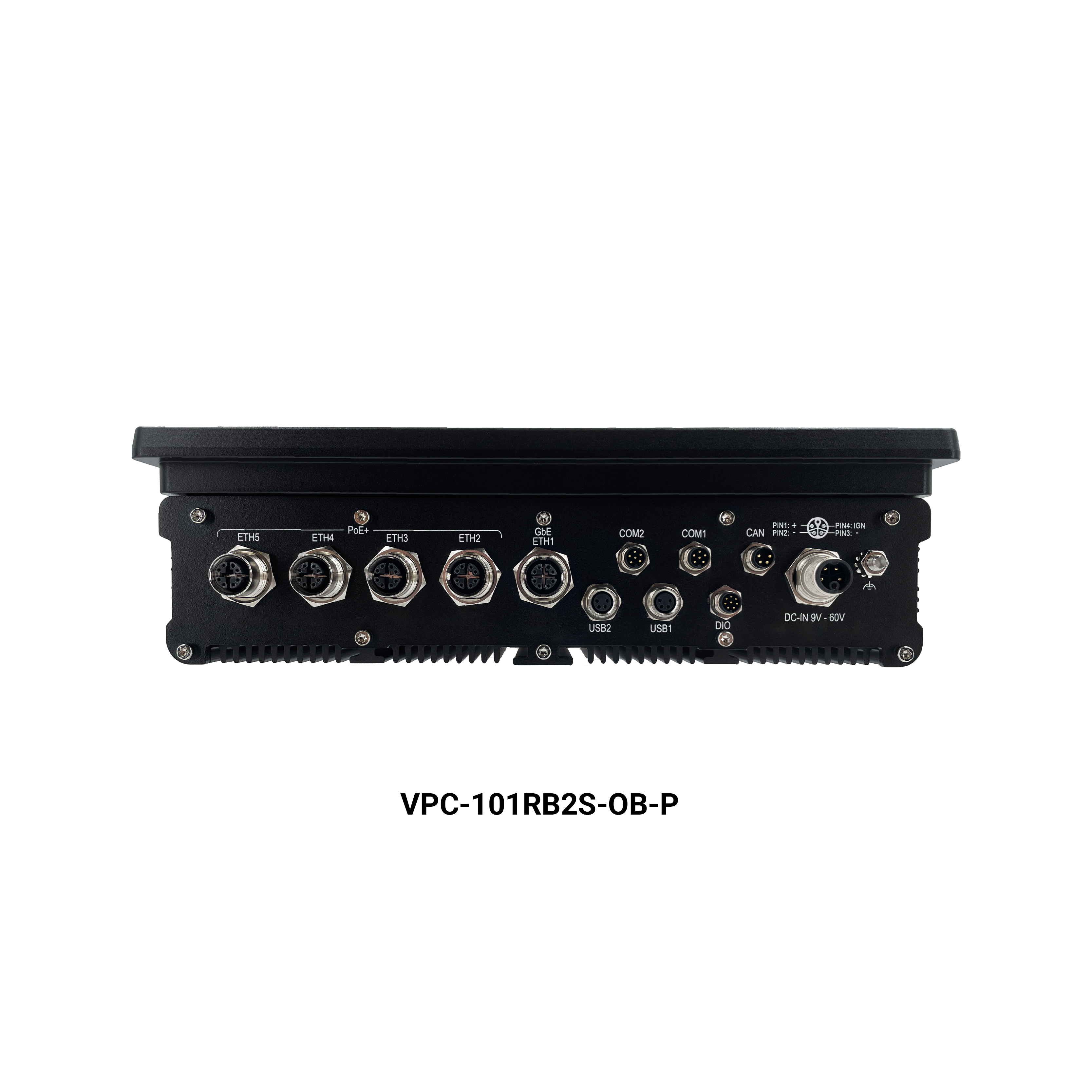
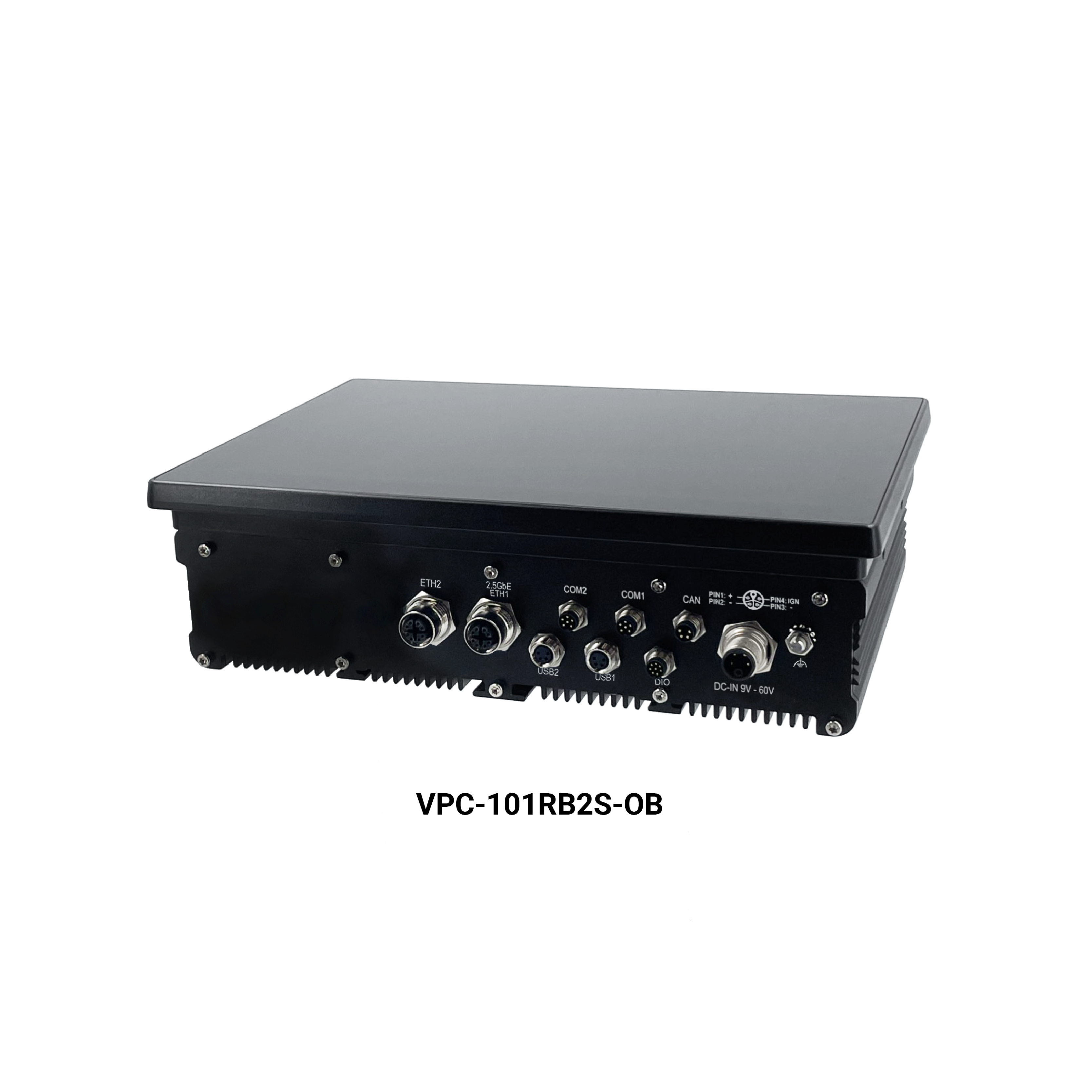
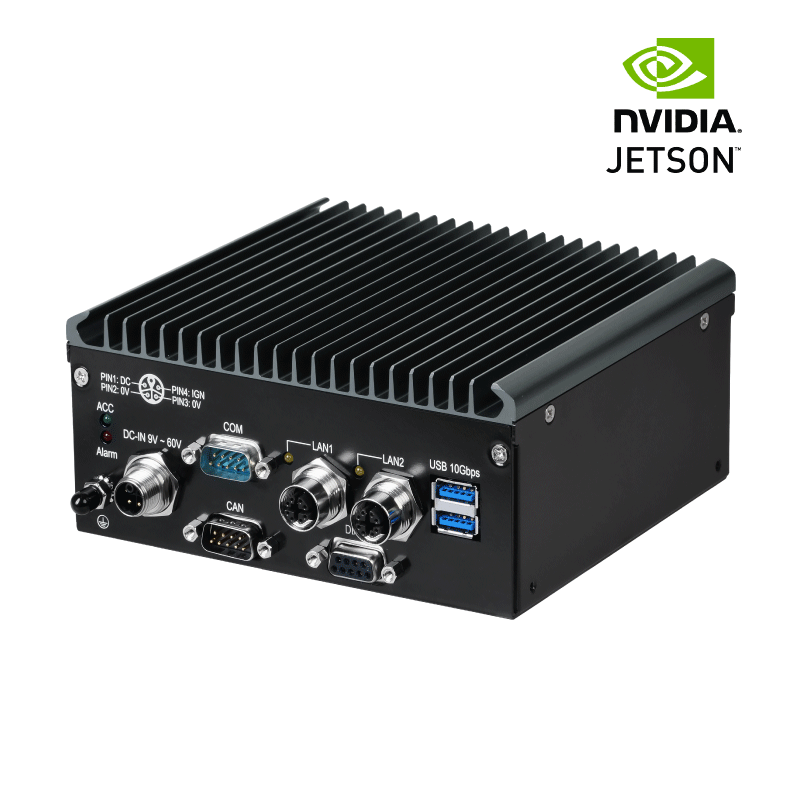
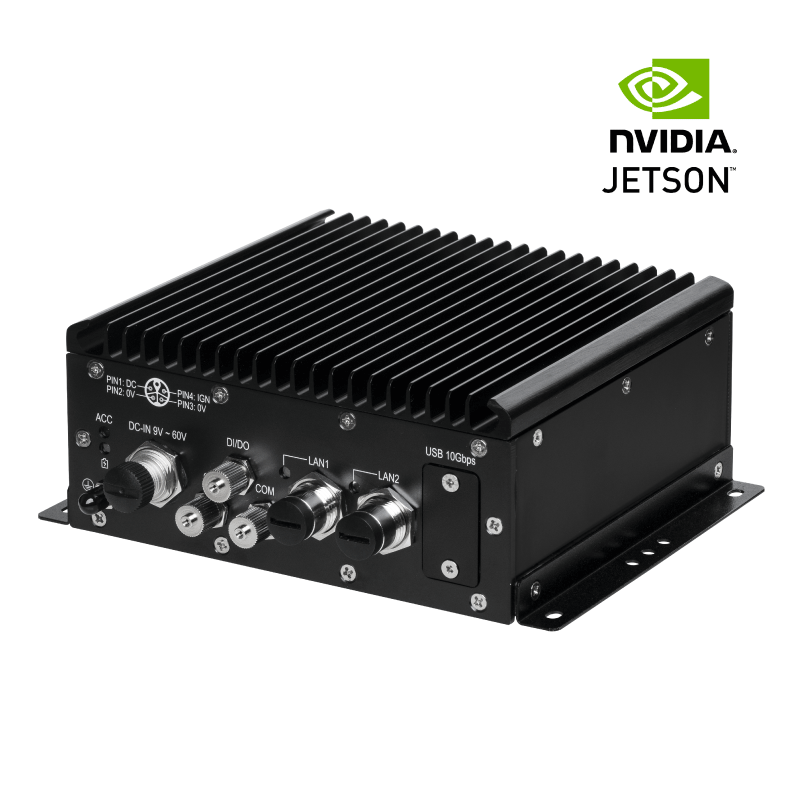
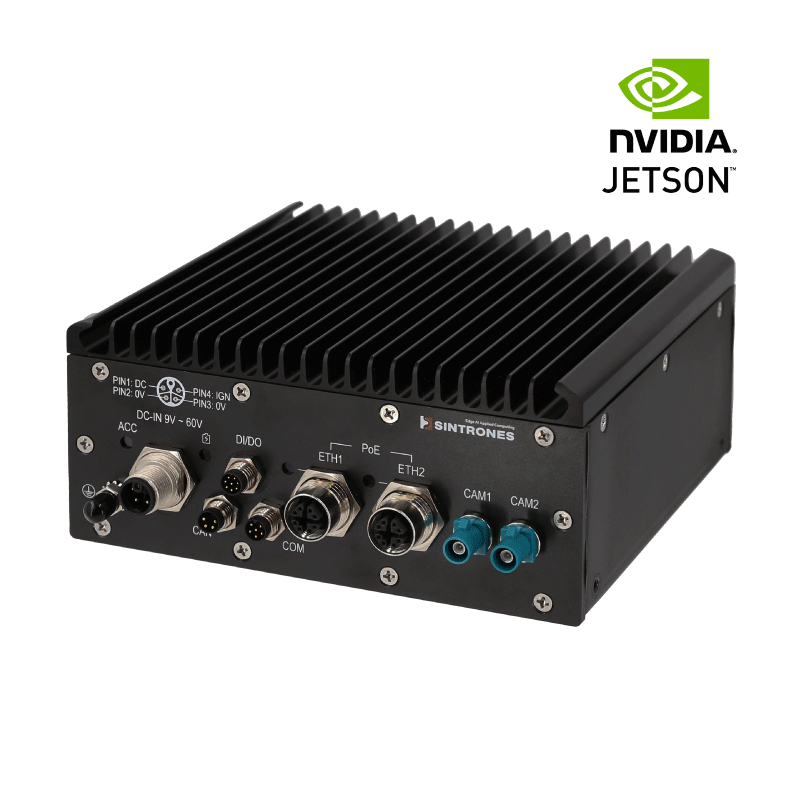
NVIDIA® Jetson Orin NX / Orin Nano Fanless Panel PC
• NVIDIA® Jetson Orin™ NX 16GB
(1024 CUDA cores + 8-core ARM Cortex-A78AE CPU + 16 GB LPDDR5)
• NVIDIA® Jetson Orin™ NX 8GB
(1024 CUDA cores + 6-core ARM Cortex-A78AE CPU + 8 GB LPDDR5)
• NVIDIA® Jetson Orin™ Nano 8GB
(1024 CUDA cores + 6-core ARM Cortex-A78AE CPU + 8 GB LPDDR5)
Platform Security Controller (PSC), Security Engine (SE)
10.1″
1280 x 800
1000 nits
800:1
178/178
50000
PCT w/ AG and AF treatment
Optical Bonding
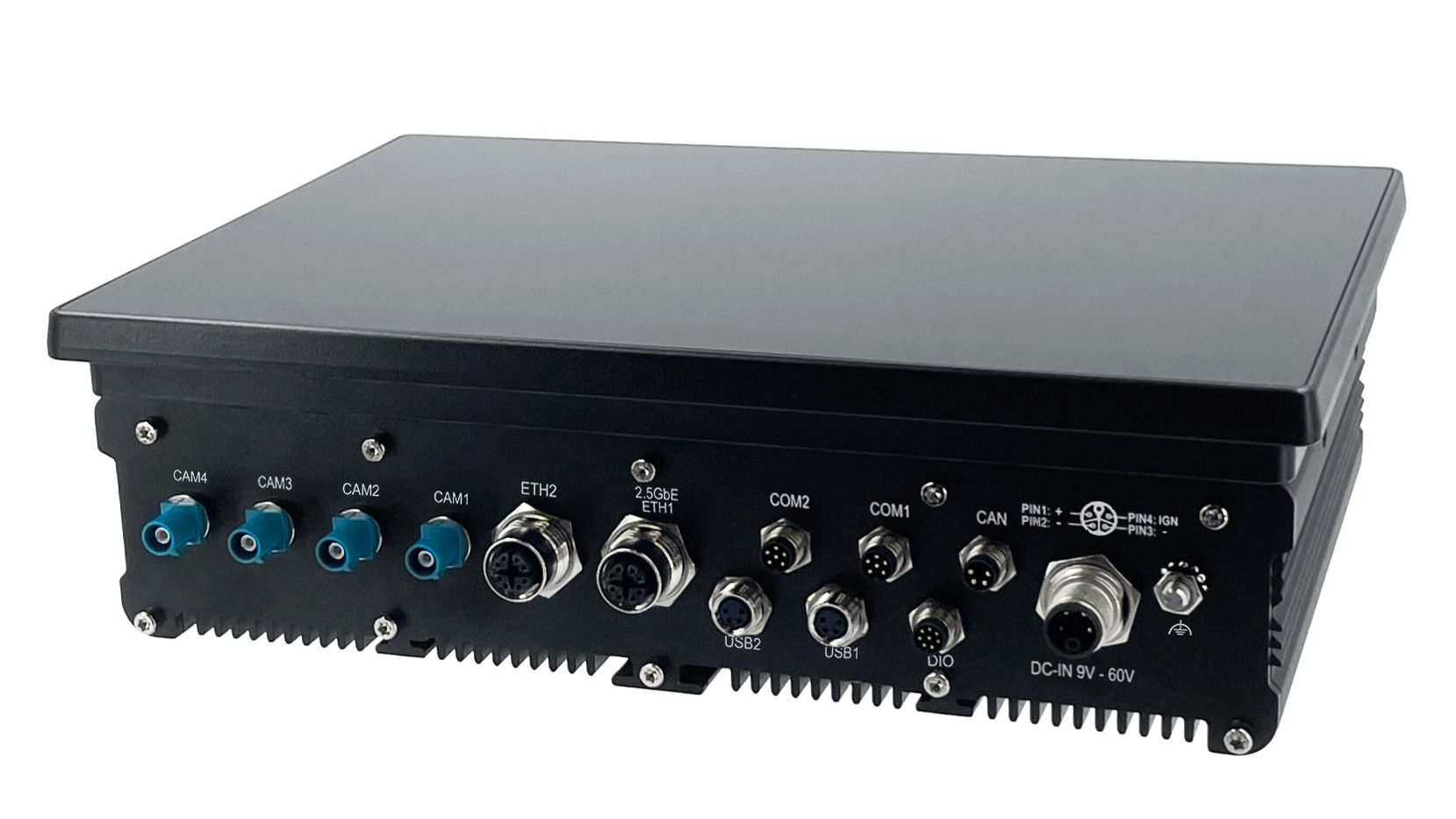
1 x Line-out, 1 x Mic-in (optional)
• 1 x 2.5 GbE (Optional 4 x PoE+ for PoE model)
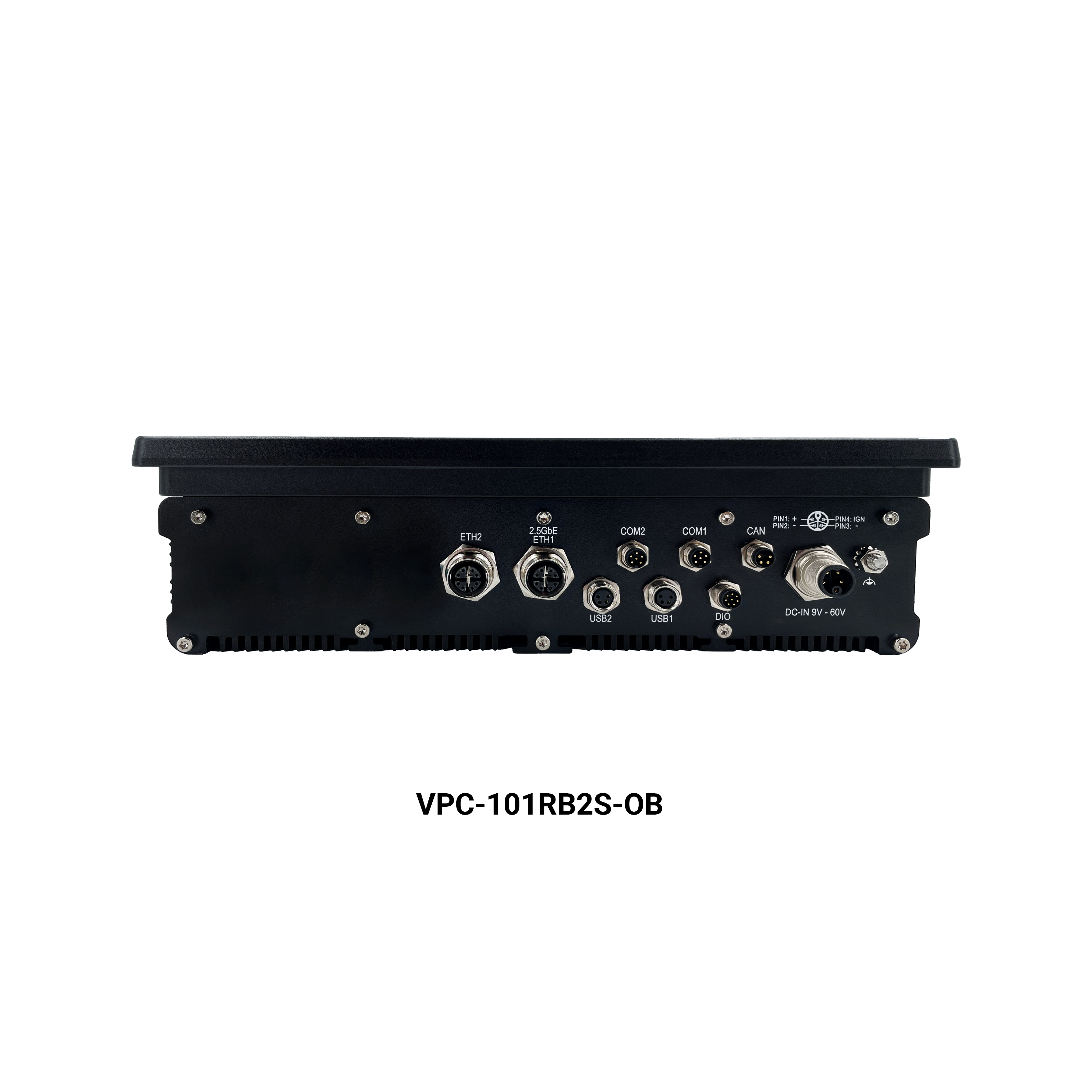
• 1 x GbE via M12 X-code
4 x GMSL-2 via FAKRA (for GMSL Model)
1 x CAN FD via M8
2 x USB 2.0 via M8
3 x DI (DC 60 V) + 4 x DO (12VDC/100mA)
• 1 x RS-232/422/485 via M8
• 1 x RS-232 via M8
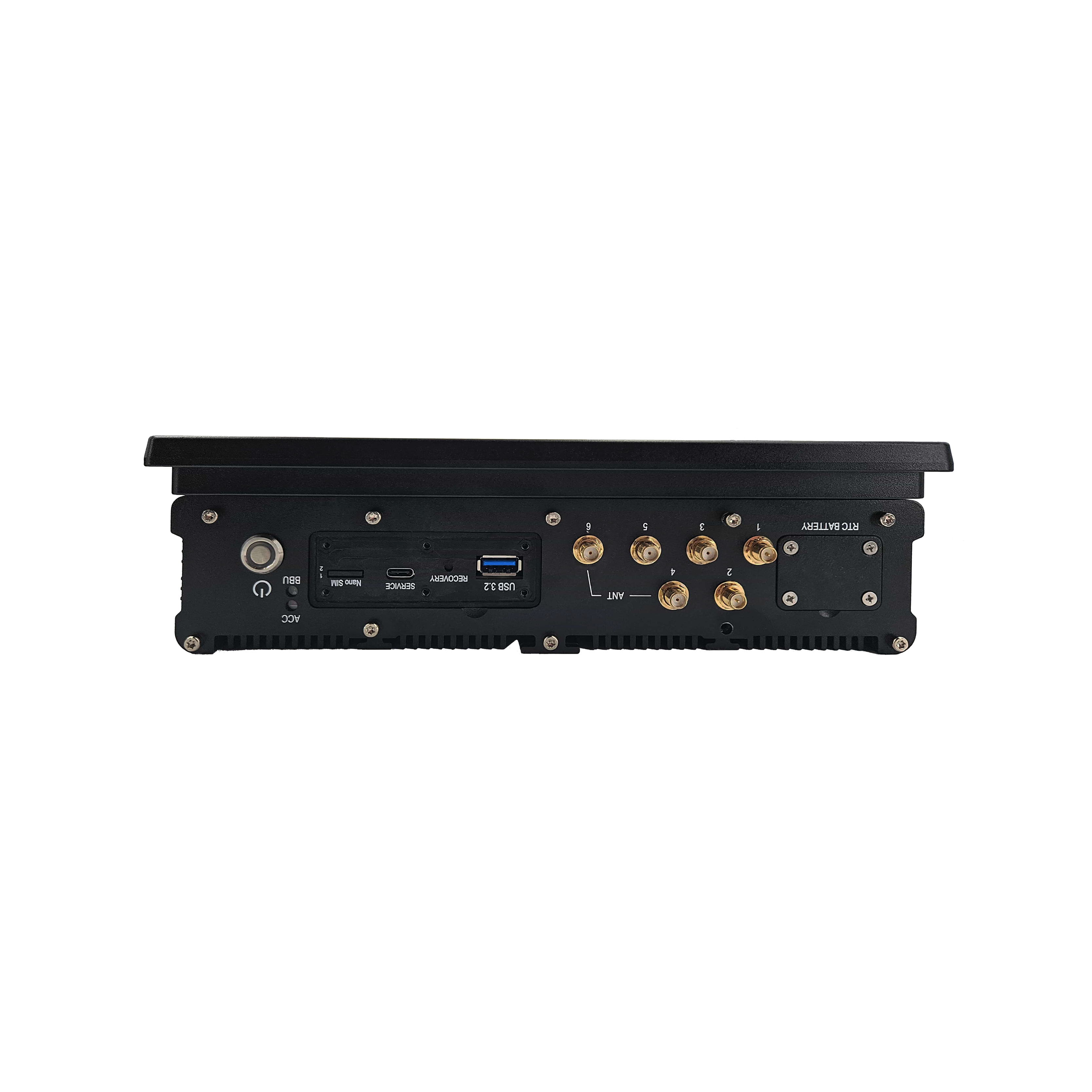
1 x USB Type-C (device only)
CE, FCC Class A, UKCA, E-Mark
• 1 x M.2 3042/3052 Key B for WWAN w/ Nano SIM support
• 1 x M.2 2230 Key E for Wi-Fi/BT
1 x M.2 2242 Key M for NVMe SSD (Pre-installed system BSP)
DC 9-60V (nominial power input DC 12V/24V/48V)
OCP, OVP, surge protection, reversed polarity protection
Ignition detection
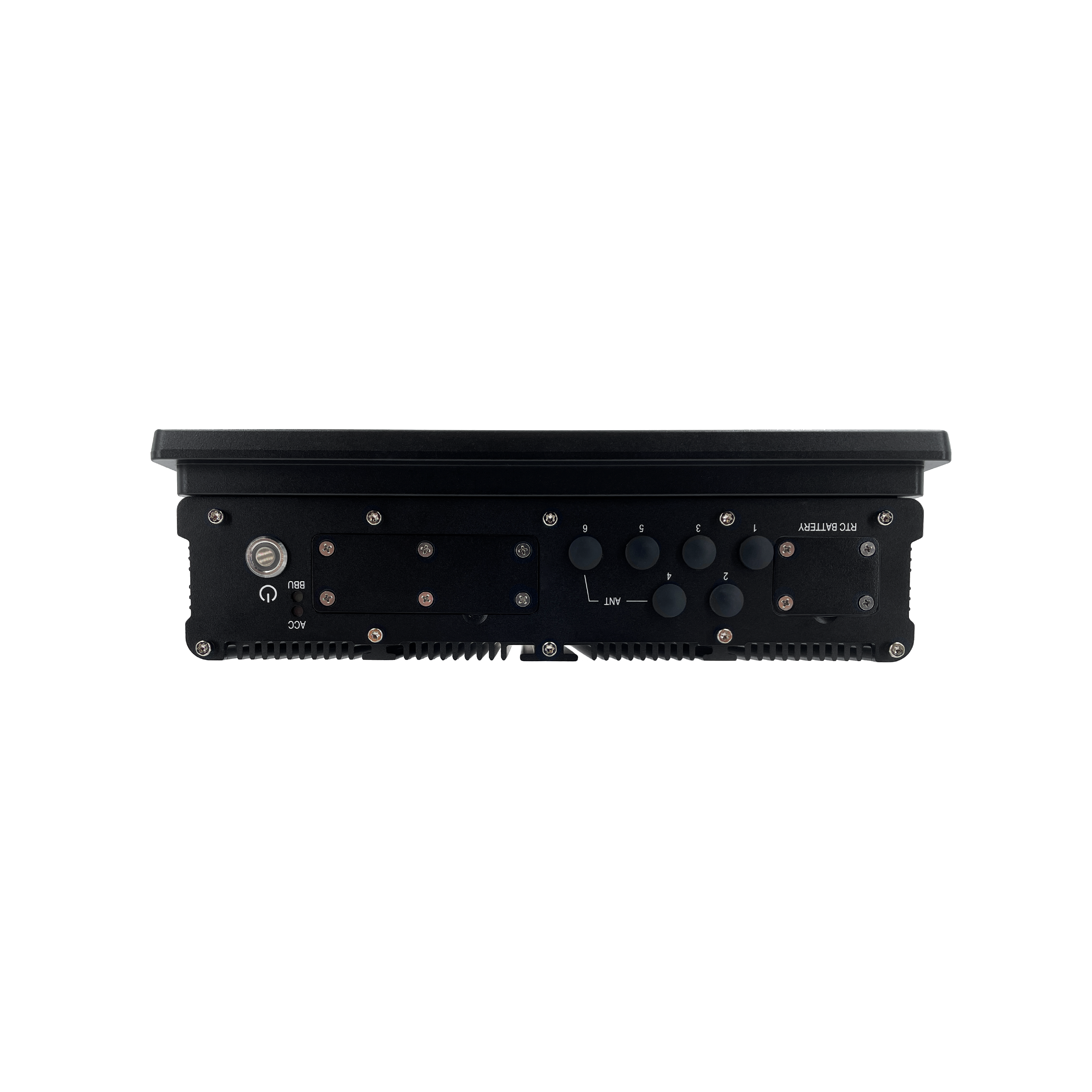
Removable top tray for RTC coin cell battery
NVIDIA® JetPack 6.2 or above
(Jetson Linux and NVIDIA® development tools included)
-25°C ~ 60°C (-13°F ~ 140°F) with 0.6 m/s airflow
-40°C ~ 85°C (-40°F ~ 185°F)
10% RH ~ 95% RH (non-condensing)
• IEC 60068-2-64, random, 2.5G@5~500Hz, 1hr/axis
• MIL-STD-810H, Method 514.8, Procedure I, Category 4
MIL-STD-810H, Method 516.8, Procedure I, trucks and semi-trailers=15G (11ms)
6 x SMA connector mounting hole
VESA 100 x 100
4.15 kg (9.15 lb)
260 x 179 x 75 (10.24 x 7.05 x 2.96 in.)
IP66
VPC-101RB2S-OB-(P/G2)-(ONX16/ONX8/ON8)
(P=with PoE+, G2=with GMSL, None=w/o function board)
Jetson Platfom:
ONX16= Jetson Orin 16GB
ONX8= Jetson Orin 8GB
ON8= Jetson Orin Nano 8GB
Made in Taiwan
M.2 2242 Key M NVMe SSD 240G/256G/480G/512G/960G, -40°C ~ 85°C
M.2 2230 Key A-E Wi-Fi module, -40°C ~ 85°C
M.2 3042/3052 Key B WWAN module w/ thermal kit, -40°C ~ 85°C
M.2 2242 Key B GNSS module, -40°C ~ 85°C
Taipei, Taiwan, May 19, 2025 – SINTRONES Technology Corp. (TWSE 6680), a leader in edge AI applied computing, will showcase its cutting-edge innovations at COMPUTEX 2025. The exhibition will highlight three key aspects of edge AI advancements: rugged IP66 solutions, GPU-accelerated computing, and vision-enabled applications. Additionally, SINTRONES will present its latest breakthroughs in in-vehicle computing performance and its ongoing advancements in display computing technologies. Must-See Live Demos: Rugged IP66 Edge AI By simulating real-world environments, the water-resistant and dustproof IBOX-650P-IP66 will reveal its exceptional ruggedness in hostile environments while showcasing advanced AI performance powered by the NVIDIA® Jetson AGX Orin™ module, delivering up to 275 TOPS for real-time video analytics and problem-solving. This makes it an ideal solution for outdoor traffic monitoring, traffic flow optimization, and transportation efficiency enhancements. GPU-Accelerated AI Vision The ABOX-5220, featuring the Raptor Lake-S Refresh i9-14900T processor and Intel® Arc™ A370E, will demonstrate high-precision anomaly detection and time-sensitive alert notification using OpenVINO™ AI inference deployment. With its AI-accelerated GPU, the ABOX-5220 enables instant edge-based decision-making, making it an optimal choice for industrial automation, mobile surveillance, and security inspection systems. Machine Vision Solutions SINTRONES has teamed up with industry players to ensure smooth machine vision integration within its embedded systems. The industrial-grade edge AI computer, IBOX-601-M12X, capable of delivering real-time and high-bandwidth video transmission and analytics, will work in tandem with oToBrite’s GMSL-2 automotive-grade cameras to perform the AI-driven monocular depth estimation task, trying to predict the depth information of a scene from the captured image, making it a top choice for Advanced Driver-Assistance Systems (ADAS) and in-vehicle infotainment. Additionally, SINTRONES will showcase the EVERPRECISION soldering (spot welding) robot that utilizes its embedded computer...
Read moreIn the era of AI-driven transportation, industrial-grade vehicle computer systems have evolved far beyond basic automotive control. For mission-critical sectors such as Smart Policing, autonomous logistics, and public transit, these systems serve as the robust backbone for real-time Edge AI processing. Unlike consumer-grade electronics, rugged vehicle computers are engineered to integrate seamlessly with CAN Bus and ECUs while enduring extreme temperatures, constant vibration, and shock. For system integrators and fleet operators, a fundamental understanding of these rugged hardware architectures is essential. These systems provide the intelligence and processing power required to manage a wide range of functions, from autonomous driving algorithms to advanced fleet telematics and public safety systems. In this article, we will delve into the intricacies of professional vehicle computer systems and discuss their significance in mission-critical performance and industrial drivability. Core Applications of Industrial Vehicle Computers Computers are essential to the operation of modern professional vehicles, providing the high-performance computing power needed for: Autonomous & Telematics: Processing data from Lidar, Radar, and cameras for autonomous driving and real-time fleet tracking. Smart Policing & Public Safety: Powering AI-driven license plate recognition (LPR), facial recognition, and multi-channel video surveillance. Fleet Management: Optimizing routes, monitoring fuel efficiency, and ensuring driver safety through integrated sensors and CAN Bus data. Rugged Connectivity: Maintaining stable 5G/LTE and Wi-Fi communication in remote or harsh environments where standard computers fail. What Is An Industrial In-Vehicle Computing System? In professional environments, a vehicle computer system is a centralized hub connected to multiple Electronic Control Units (ECUs) that monitor and regulate specific subsystems. The system receives data from specialized sensors and controls various functions through actuators. The main purpose of an industrial vehicle computer is to oversee...
Read more