Technical FAQ
Q1: How do I choose the right GPU configuration for the ABOX-5221?
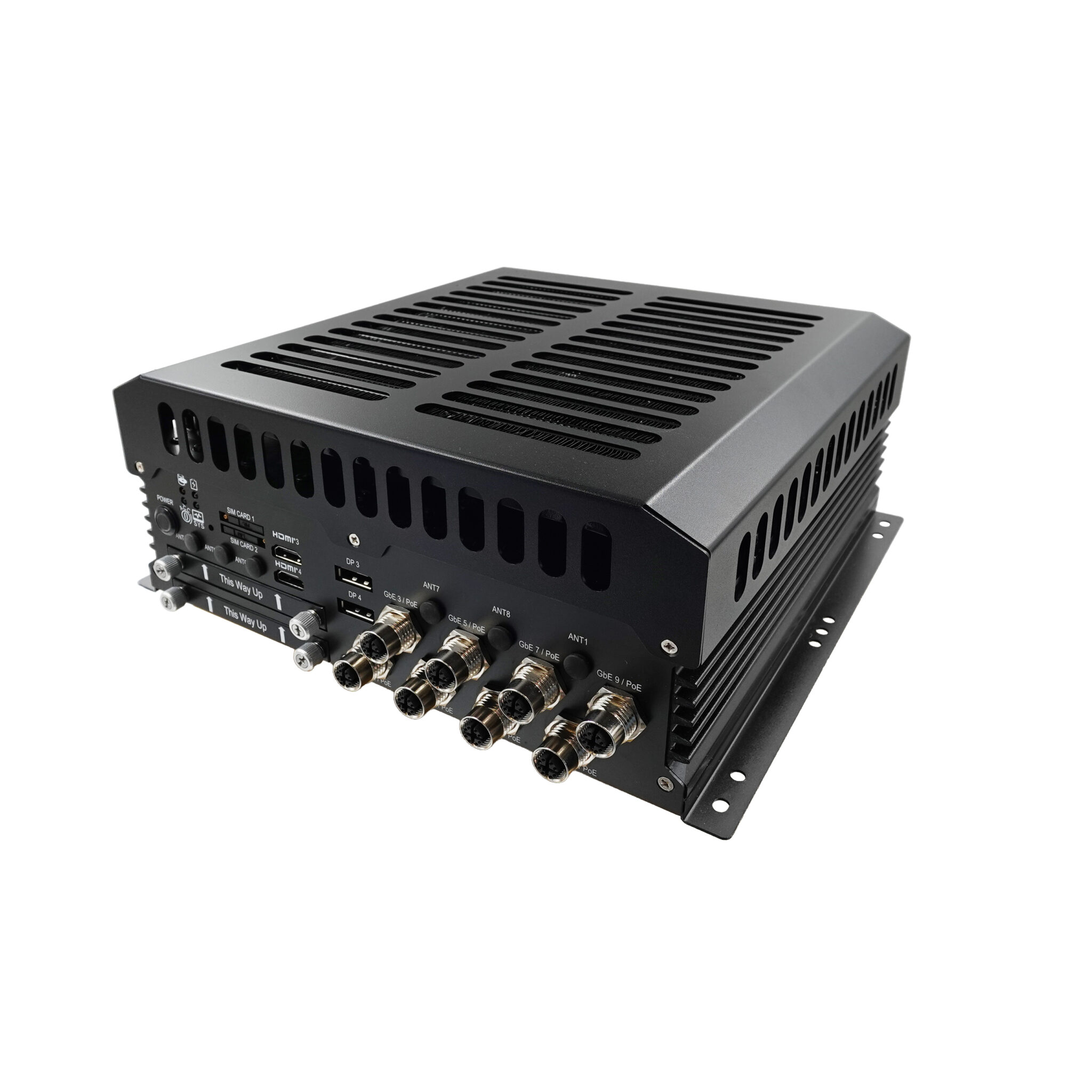
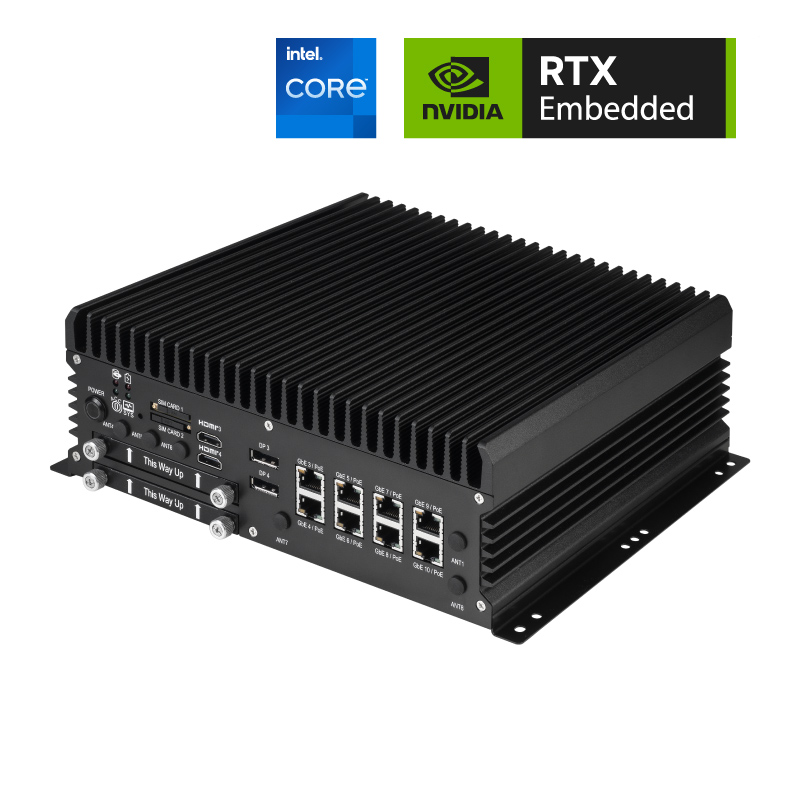
A: GPU selection should be based on AI model complexity, GPU memory requirements, video or sensor workload, software framework, and operating environment. The ABOX-5221 supports NVIDIA RTX™ Embedded 2000, 3500, and 5000 Ada Generation GPUs, as well as Intel® Arc™ A370E. Higher-end GPU configurations provide greater AI compute performance and GPU memory for demanding workloads such as multi-stream vision, deep learning inference, and sensor fusion, while lower-power options may be more suitable when workload requirements or thermal constraints are more moderate. Actual performance depends on the AI model, framework, precision, and overall processing pipeline.
Q2: When do Edge AI systems need 10GbE instead of 1GbE or 2.5GbE?
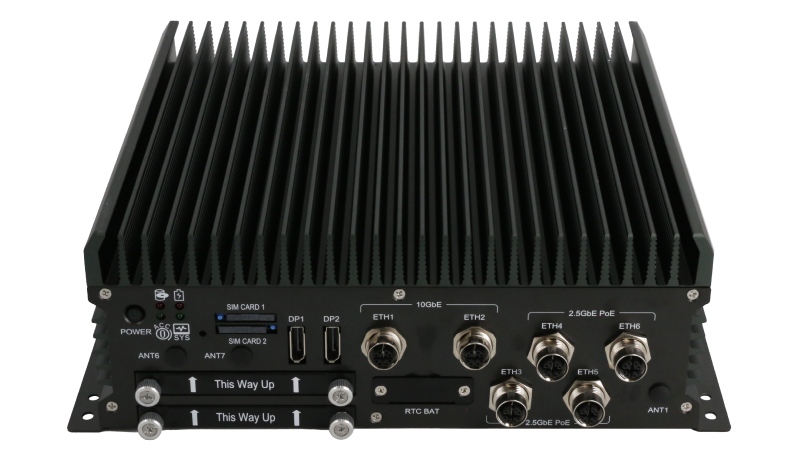
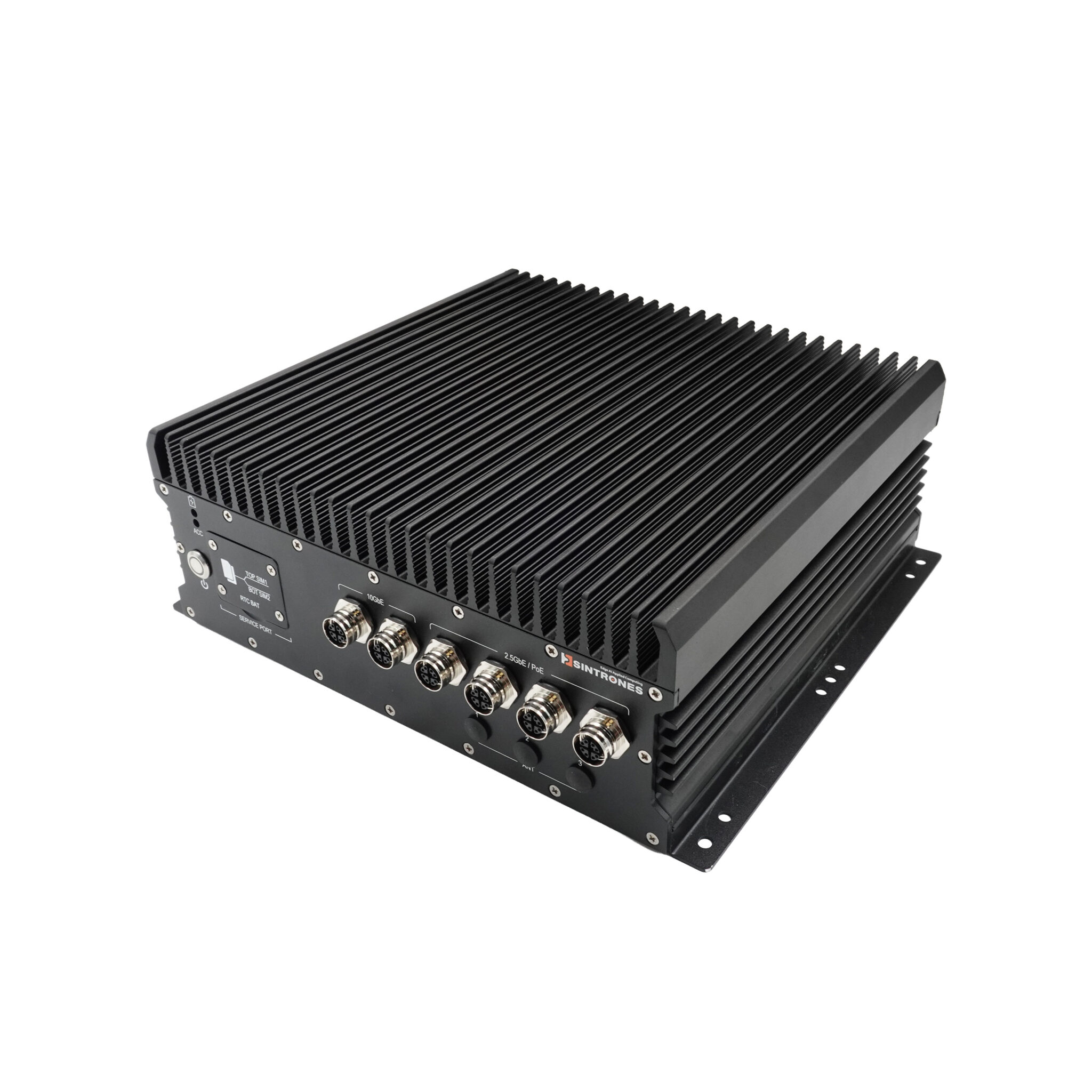
A: 10GbE becomes valuable when large volumes of data need to move between the Edge AI computer, network infrastructure, storage systems, or other high-bandwidth devices. The ABOX-5221 provides two 10GbE ports alongside four 2.5GbE ports, allowing high-bandwidth uplinks to be separated from device-level connections. This architecture can support applications involving multiple high-resolution data streams, centralized sensor aggregation, or large data transfers where standard Gigabit Ethernet may become a bandwidth constraint.
Q3: How can the ABOX-5221 support high-bandwidth cameras and PoE+ edge devices?
A: The ABOX-5221 provides four 2.5GbE ports with optional PoE+, supporting up to 25.5W per port with a total PoE power budget of 120W. This allows compatible cameras, sensors, and other Ethernet devices to receive both data connectivity and power through a single cable. When configuring multiple devices, individual power consumption, aggregate network bandwidth, data rates, storage throughput, and AI processing requirements should be evaluated together.
Q4: How should I configure storage for high-volume AI vision and sensor data?
A: Storage architecture should be planned according to data rate, write performance, capacity, retention period, and redundancy requirements. The ABOX-5221 supports three M.2 SSDs and two removable 2.5-inch SATA SSDs, with RAID 0/1/5 support through Intel® VMD. This allows operating systems, AI applications, temporary processing data, and recorded video or sensor data to be distributed across different storage devices. RAID configuration should be selected according to the required balance between performance, usable capacity, and data redundancy.
Q5:What should I consider when deploying a high-performance Edge AI computer in railway applications?
A: Railway Edge AI deployments require computing performance to be evaluated together with power input, network connectivity, operating temperature, vibration and shock resistance, connector security, and applicable railway standards. The ABOX-5221 supports EN 50155 and EN 45545-2 (R25), optional M12 X-coded Ethernet, 9–60V DC input, and an operating temperature range of -40°C to 70°C under specified conditions. It is also tested according to MIL-STD-810H vibration and shock methods and EN 61373 requirements. Actual operating temperature depends on the installed GPU and other accessories.