Technical FAQ
Q1: How do I choose between NVIDIA RTX™ Embedded and Intel® Arc™ GPUs for my Edge AI workload?
A: GPU selection should be based on AI model complexity, framework compatibility, GPU memory requirements, video or sensor workload, and power considerations. NVIDIA RTX™ Embedded Ada Generation GPUs provide different levels of CUDA, Tensor Core, and GPU memory resources for demanding AI inference and computer vision workloads, while Intel® Arc™ A370E provides an alternative for applications built around Intel’s graphics and AI software ecosystem. Actual performance depends on the AI model, framework, precision, and overall processing pipeline.
Q2: How can the ABOX-5220 support multi-camera AI vision and real-time video analytics?
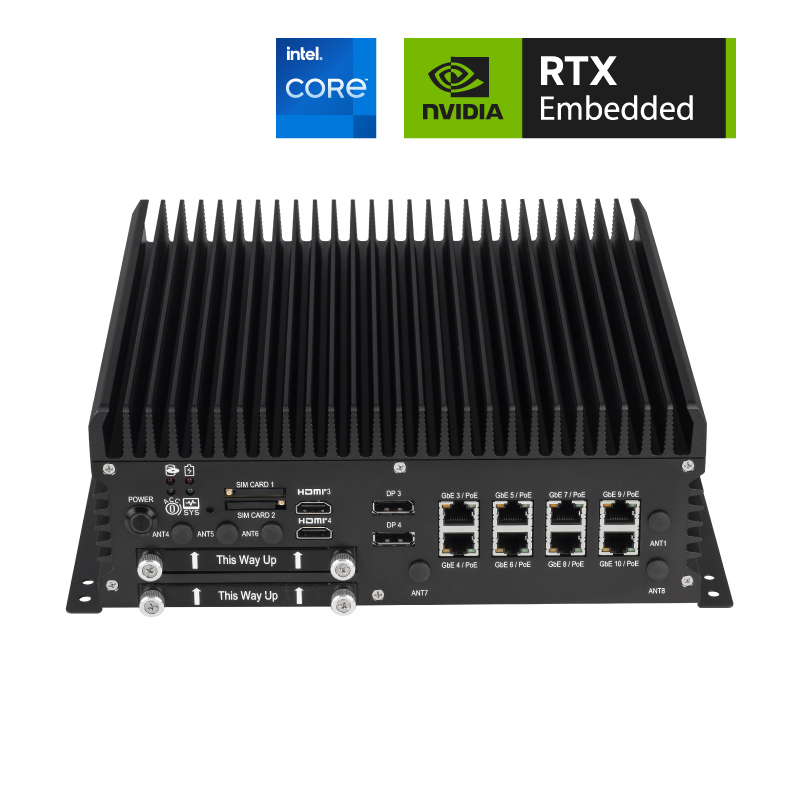
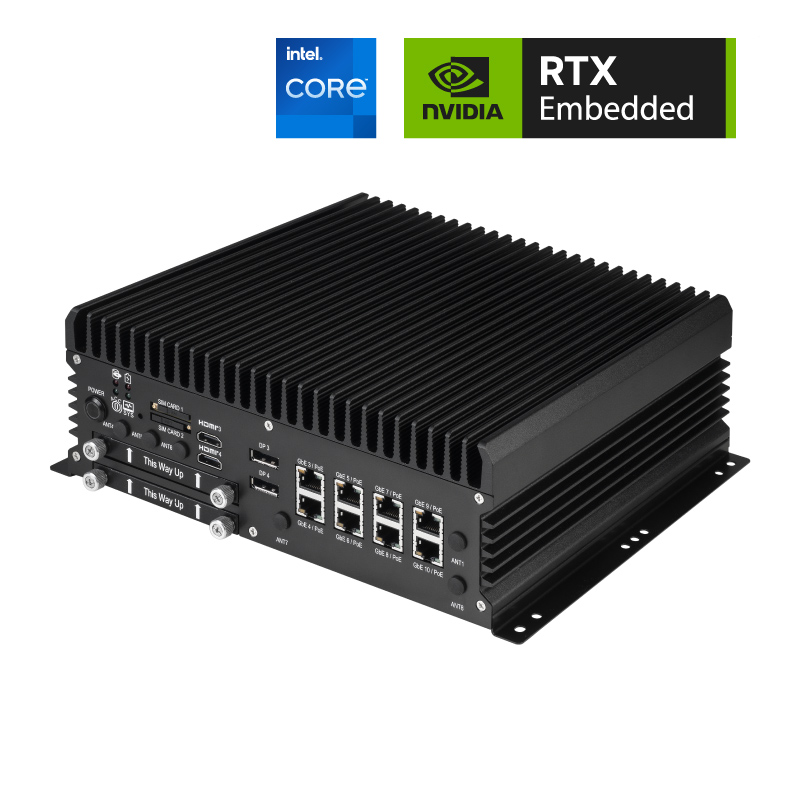
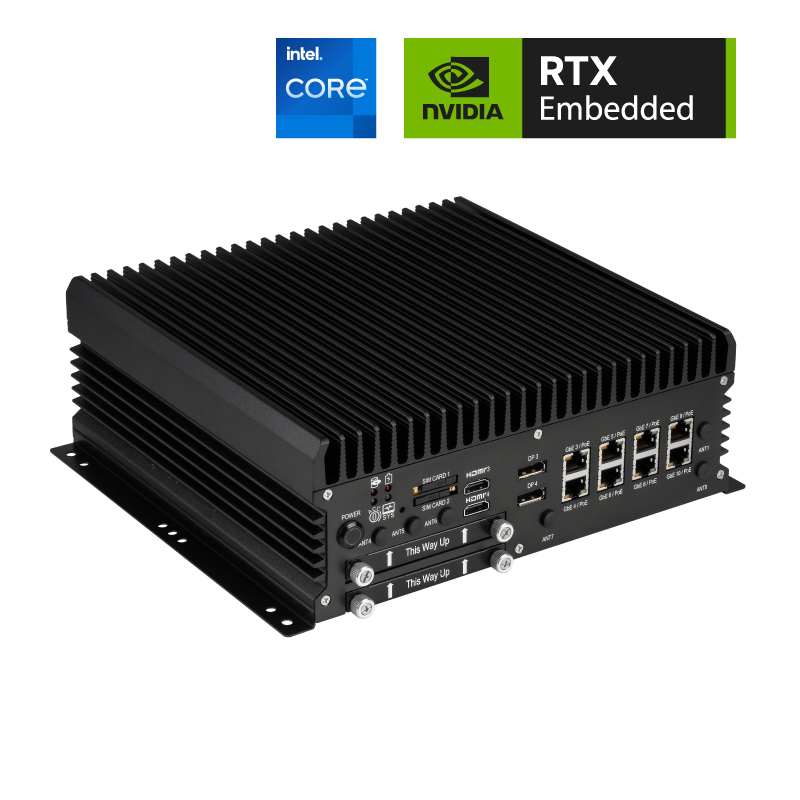
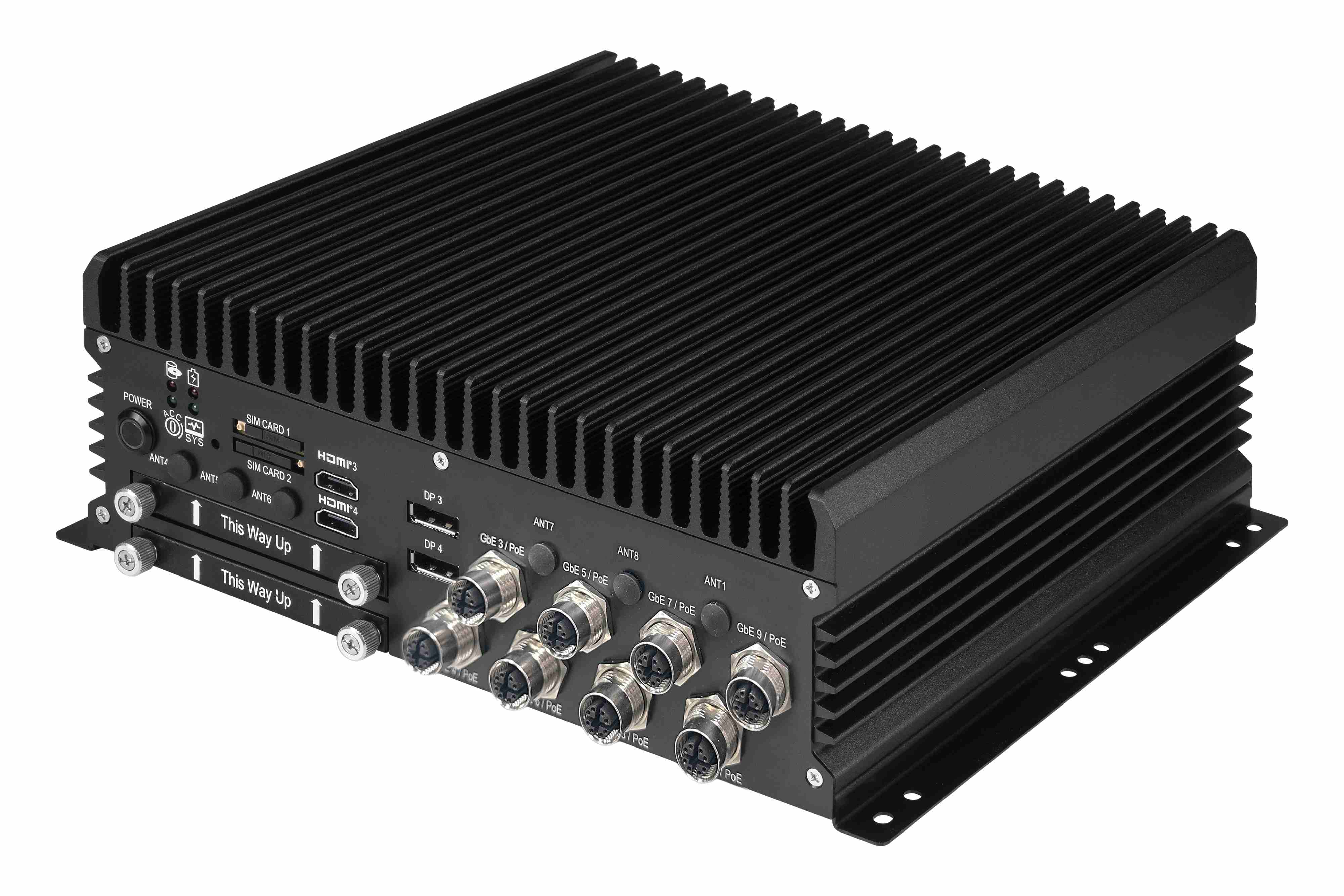
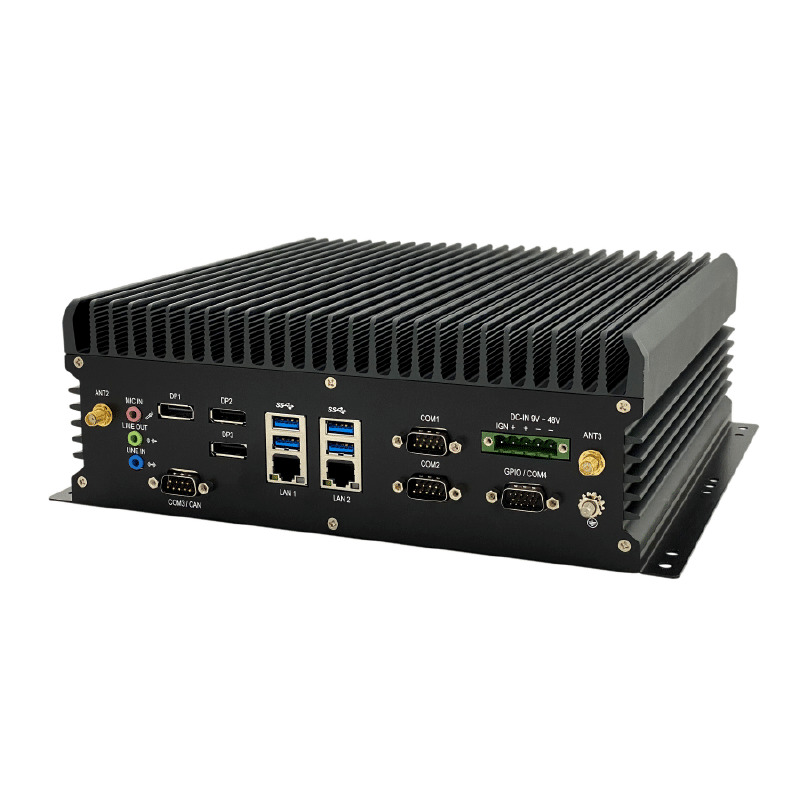
A: The ABOX-5220 combines discrete GPU acceleration with eight GbE ports, optional PoE, and two additional 2.5GbE interfaces for high-density network connectivity. This architecture supports multiple IP camera streams while processing AI workloads locally for applications such as object detection, tracking, video analytics, and intelligent surveillance. Camera resolution, frame rate, codec, aggregate network bandwidth, storage throughput, and AI processing load should all be considered when configuring a multi-camera system.
Q3: When should TSN-ready 2.5GbE be used in an Edge AI system?
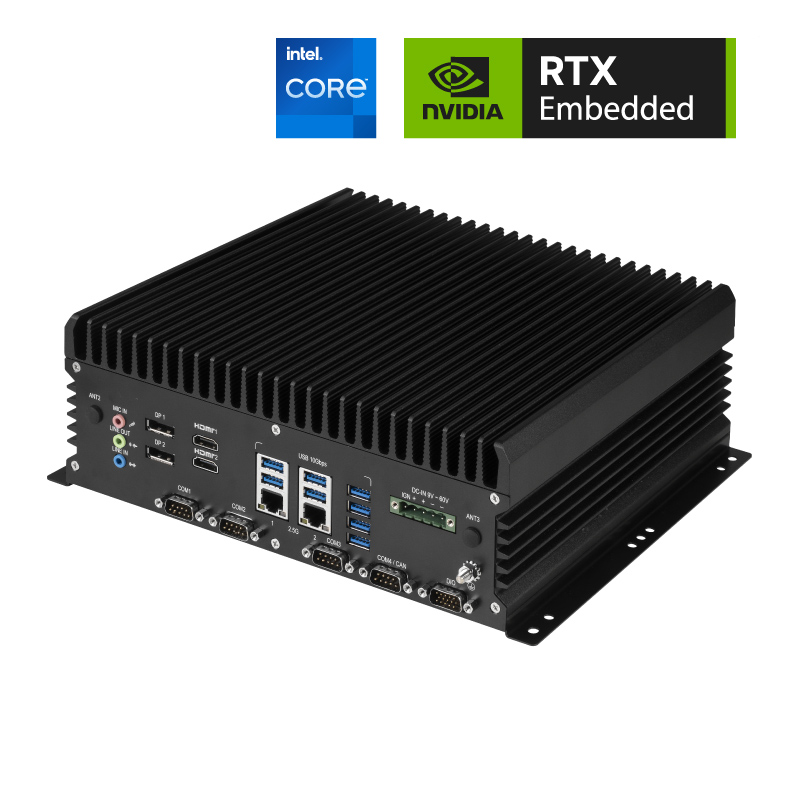
A: TSN is relevant when time-sensitive data from cameras, sensors, controllers, or other network devices needs more predictable Ethernet communication. The ABOX-5220 provides two TSN-ready 2.5GbE controllers in addition to eight GbE ports, allowing time-sensitive network traffic to be separated from standard Ethernet devices. Actual TSN functionality depends on the operating system, network configuration, connected devices, and supported TSN protocols across the complete network.
Q4: How should I configure storage for AI video analytics and continuous data recording?
A: Storage should be planned according to video bitrate, recording duration, write performance, capacity, and data-retention requirements. The ABOX-5220 supports up to five SSDs through a combination of M.2 NVMe/SATA and 2.5-inch SATA storage, allowing the operating system, AI applications, and recorded video or sensor data to be distributed across different drives. High-speed NVMe storage can be used for performance-sensitive workloads, while additional SATA storage can provide scalable capacity for continuous recording and edge data logging.
Q5: What should I consider when deploying an Edge AI computer in railway and vehicle environments?
A: Transportation deployments require more than computing performance alone. Power input, ignition management, operating temperature, vibration and shock resistance, connectivity, and applicable certifications should also be considered. The ABOX-5220 supports 9–60V DC input, smart ignition management, wide-temperature operation, and M12 X-coded configurations, and is E-Mark certified with EN 50155 and EN 45545-2 (R25) compliance for transportation applications.