Intelligent monitoring systems can help users save costs and improve efficiency. Through automated and intelligent monitoring and analysis, the system can reduce the demand for human resources while improving the accuracy and efficiency of monitoring. In addition, the system can also perform data statistics and report generation to help users better allocate and manage resources.
- Security monitoring: use surveillance cameras, motion detection, and face recognition technology to realize security monitoring of public places, corporate offices, warehouses, and other areas. The system can automatically detect and alarm for any suspicious activity or abnormal behavior, providing instant security alarm and video surveillance.
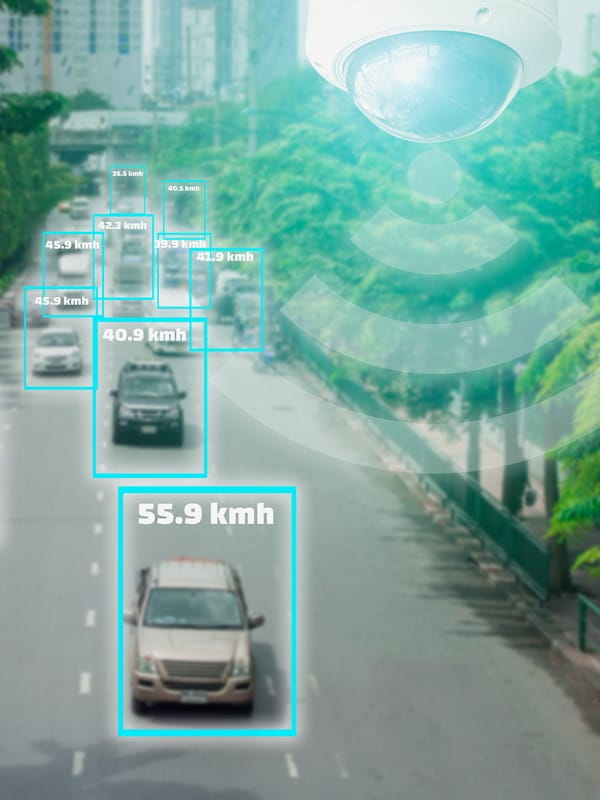
- Traffic monitoring: Use traffic cameras, license plate recognition, and traffic flow analysis technologies to realize urban traffic monitoring and management. This scheme can detect traffic violations, measure traffic flow, predict congestion, and provide real-time traffic status information to help traffic management departments make appropriate decisions.
- Environmental monitoring: Use sensors and data collection technologies to monitor and analyze environmental indicators such as air quality, water quality, temperature, and humidity. The system can detect and alarm abnormal situations in real-time, helping environmental protection agencies and city managers to carry out environmental monitoring and governance.
- Agricultural monitoring: Apply Internet of Things (IoT) technology and sensors to monitor soil moisture, weather conditions, plant health status, etc., in farmland and provide corresponding irrigation and management suggestions based on the data. Such a monitoring system could increase crop yield and quality while saving water and fertilizer use.
- Industrial monitoring: Apply IoT and monitoring technology to monitor factories’ and production equipment’s operating status and efficiency. The system can detect equipment failure, save energy, optimize production processes, and provide real-time alarm and monitoring data to improve production efficiency and quality.
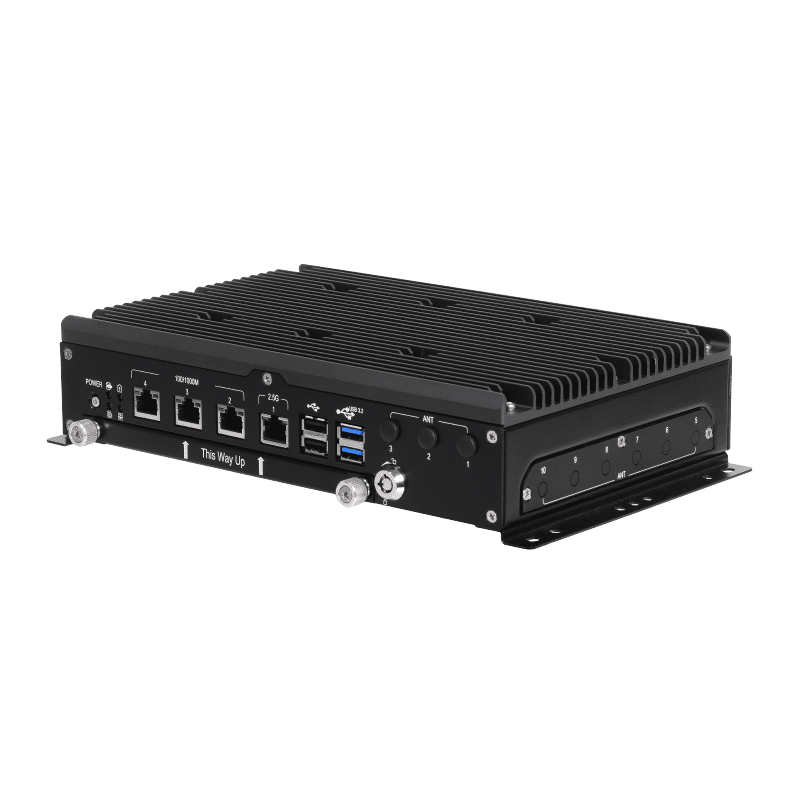
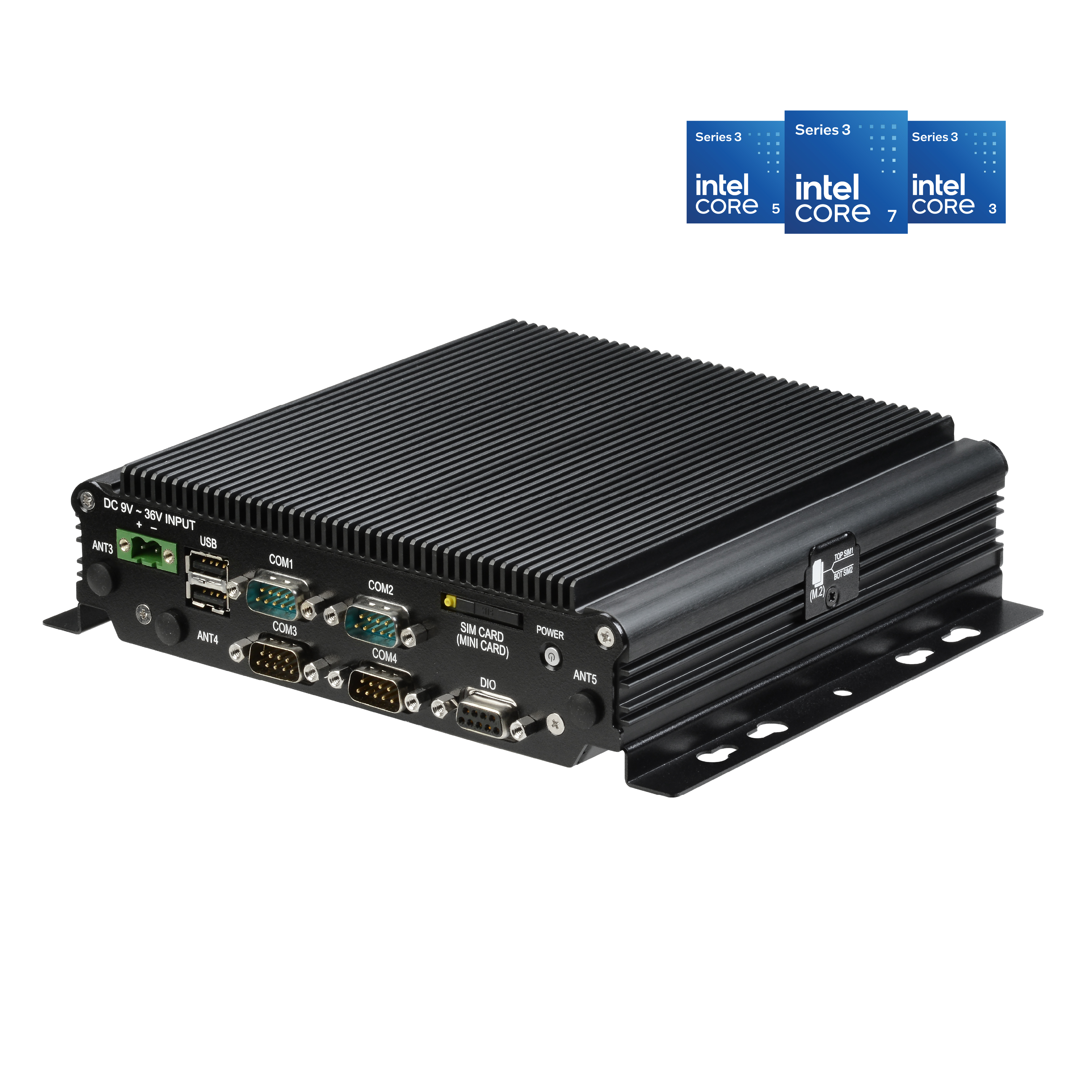
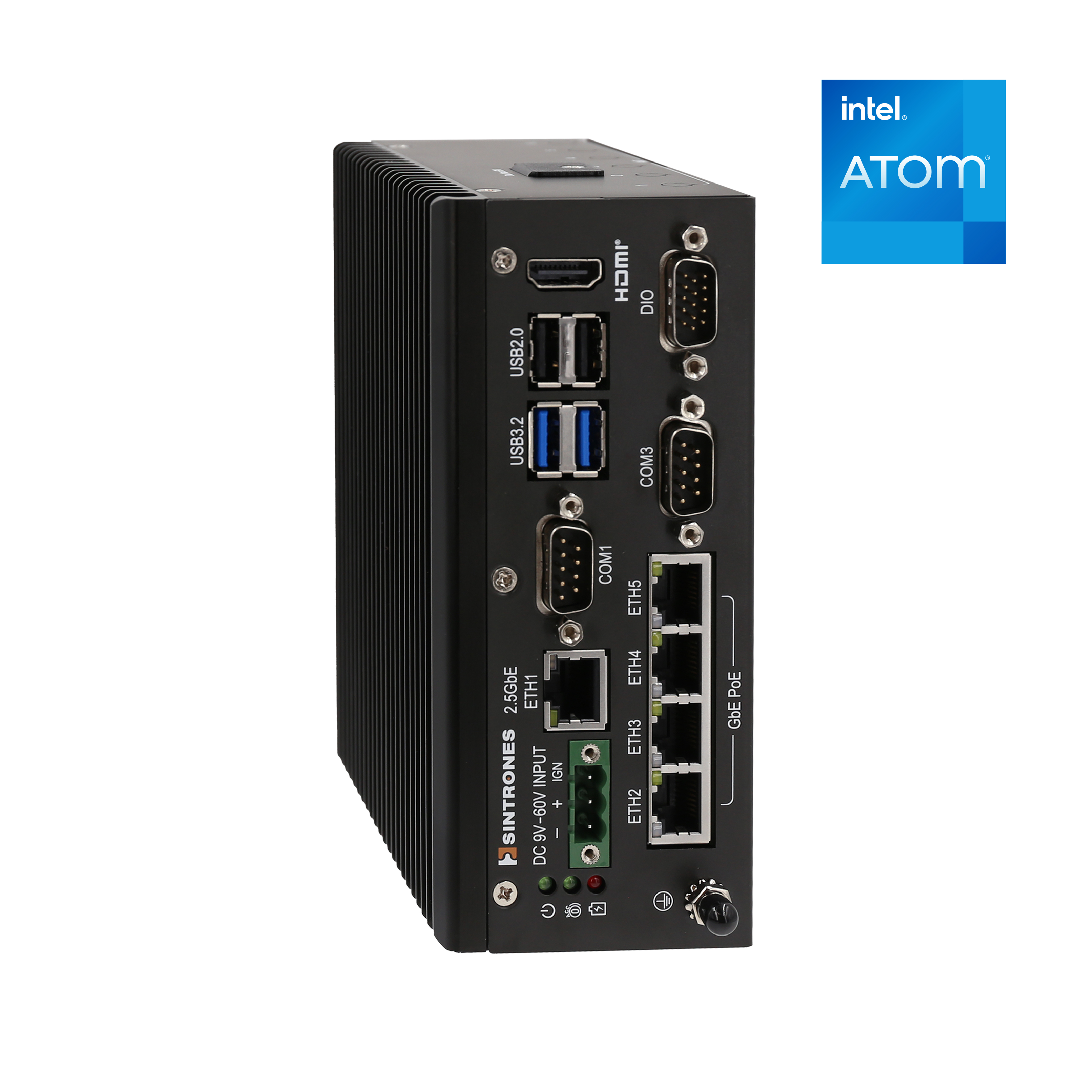
These systems provide outstanding performance and stability under harsh environmental conditions or in scenarios requiring high performance and low power consumption. SINTRONES’ fanless computer system can provide high-performance, high-reliability, and high-flexibility solutions and is suitable for harsh outdoor environments. This makes these systems ideal for outdoor video surveillance.
Key Features of SINTRONES Intelligent Surveillance:
- Rugged design: Fanless computer systems typically feature a solid metal enclosure, such as aluminum alloy, that helps protect the electronics inside from harsh environments, including moisture, dust, vibration, and shock. Additionally, many fanless systems are IP67 rated, which means they are somewhat resistant to dust and water. This is critical for outdoor surveillance systems, often exposed to these environmental conditions.
- Wide operating temperature range: Another critical advantage of fanless systems is that they can operate over a wide temperature range, typically -25°C to 70°C. This allows these systems to operate under extreme temperatures like hot summers or cold winters without performance degradation.
- Fanless operation: Fanless computer systems do not rely on fans for cooling, eliminating possible interruptions due to fan failure. This design increases system reliability and is especially useful for applications requiring long-running time, such as outdoor monitoring.
- High performance and expandability: SINTRONESXinchuang Electronics‘ fanless computer systems usually use high-performance Intel Core i series processors and graphics cards, which can easily handle high-definition videos and large amounts of data. In addition, these systems are usually equipped with various I/O ports and expansion slots to connect external devices such as cameras, sensors, etc.
- Network Connectivity: In surveillance systems, stable network connectivity is essential. Therefore, a fanless computer system should have multiple networking options, both wired and wireless. A wired network can provide stable and high-speed data transmission, while a wireless network provides greater flexibility, especially where network cables cannot be easily deployed.
- Multi-Screen Support: Sometimes outdoor surveillance may require video or information to be displayed on multiple screens. Therefore, fanless computer systems should support multi-screen displays, allowing operators to view live feeds from multiple cameras simultaneously or view the video on one screen while viewing other information on another.
- Real-time computing capability: For outdoor monitoring systems, it is crucial to perform real-time image analysis, such as object detection, face recognition, abnormal behavior detection, and so on. SINTRONESXinchuang Electronics‘ fanless computer system has high-performance processors and graphics cards, which can support these real-time computing tasks.
- High Data Security: Data security is essential since surveillance systems may involve sensitive personal information. A fanless computer system should provide various data protection measures such as data encryption, backup and recovery options, and defensive protection of the system to prevent unauthorized access or attacks.
- Low power consumption: Since the outdoor monitoring system needs to run for a long time, the design of low power consumption has become an important feature. SINTRONES’ fanless computer system uses a low-power processor and advanced power management technology to reduce total power consumption and extend system runtime. This reduces energy costs and helps reduce heat generation, allowing the system to run stably without fans.
- Flexible Mounting Options: Many fanless computer systems offer flexible mounting options such as wall, shelf, or flush mount. This allows these systems to be easily installed in various scenarios as required, such as on walls, inside cabinets, or directly embedded in other equipment.
- Small size: Fanless computer systems are typically smaller and lighter than traditional desktop computers. This makes installing them easier in confined spaces, such as in certain tight places or on fixed equipment.