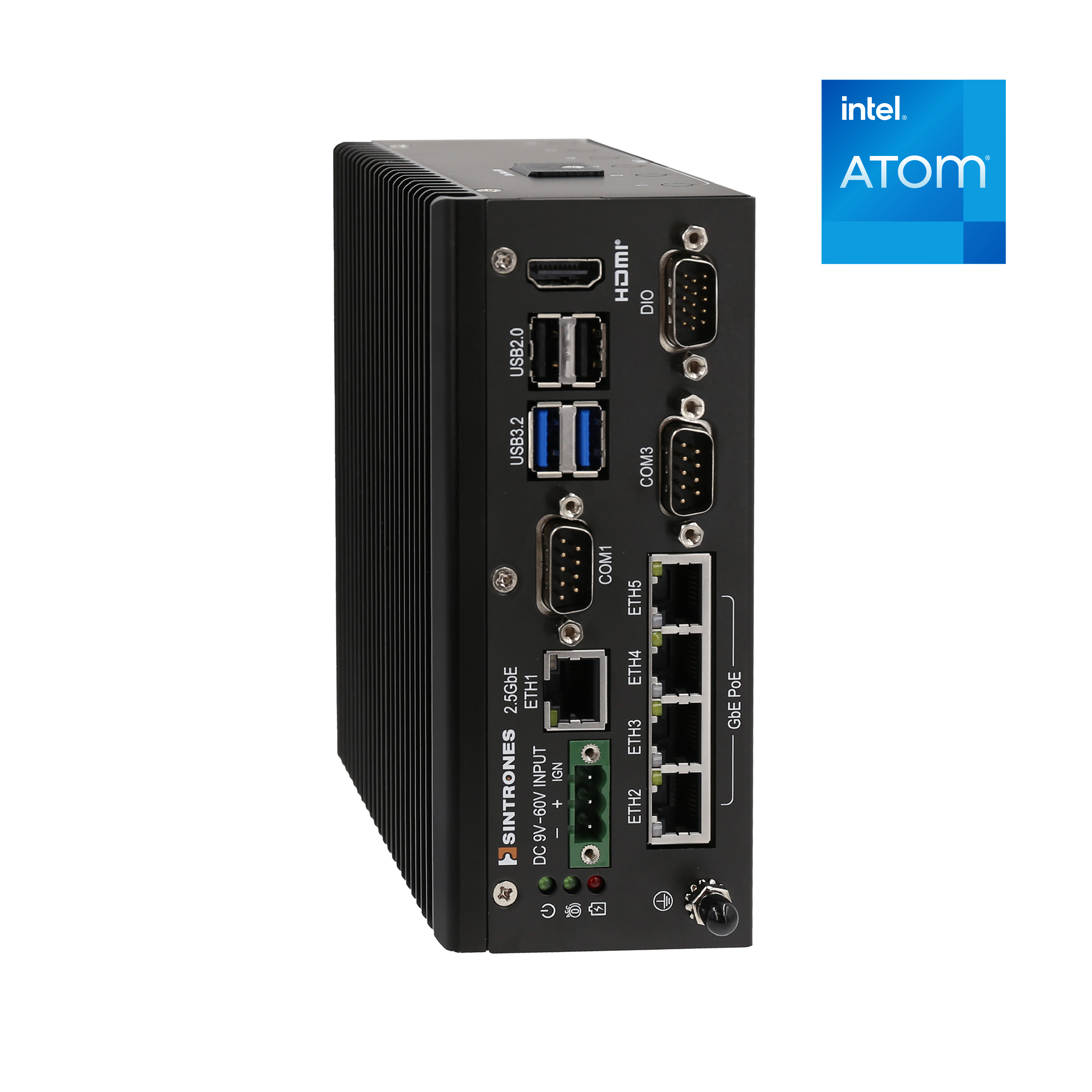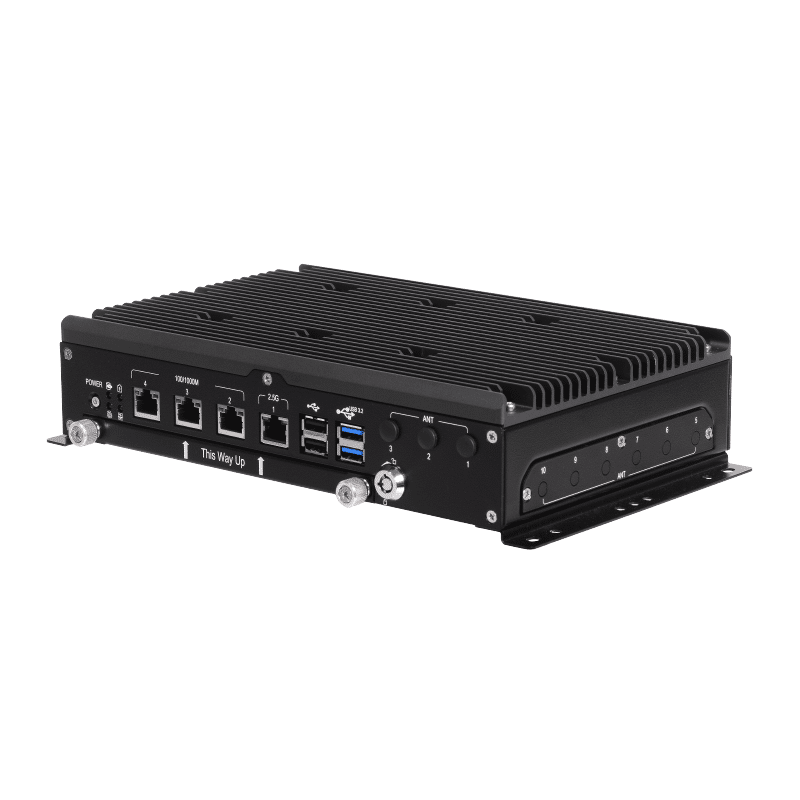
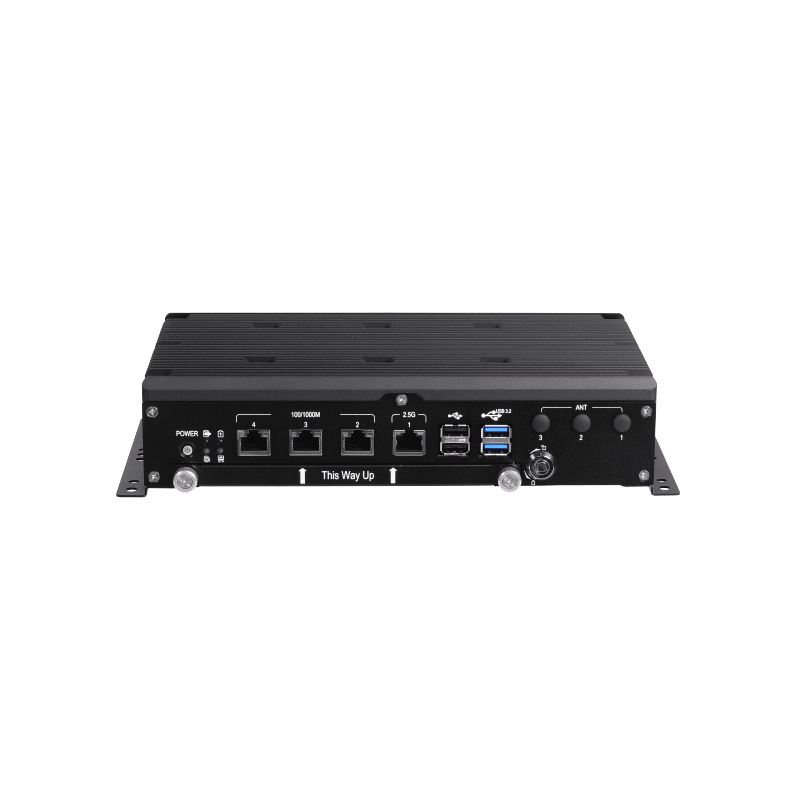
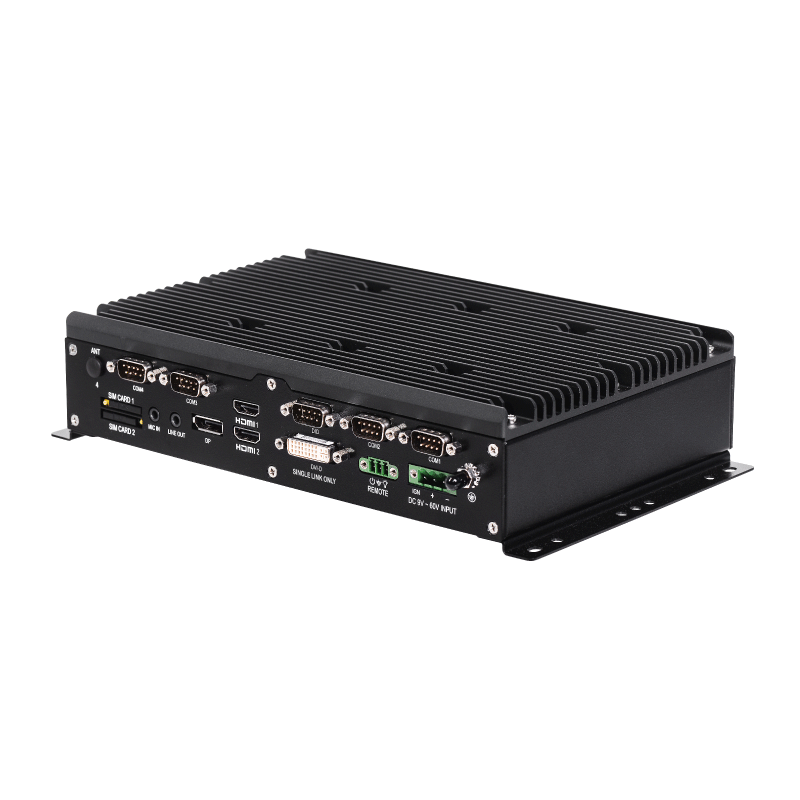
Intel® 11th Gen Core™ i7-1185G7E CPU with 4 x LAN On-Board In-Vehicle Computer


• Intel® 11th Gen Core™ i7-1185G7E 1.8GHz up to 4.4GHz
• Intel®11th Gen Core™ i5-1145G7E 1.5GHz up to 4.1GHz
• Intel® 11th Gen Core™ i3-115G4E 2.2GHz up to 3.9GHz
• Intel® Celeron® 6305E up to 1.8GHz
• 2 x DDR4-3200 SO-DIMM Up to 64GB
• 1 x Intel® 2.5GbE
• 3 x Intel® Gigabit Ethernet
• Watchdog Timer Support, Offer 1 – 255 Step
• 2.0
• 2 x USB 3.2 Gen 2 (10 Gbps)
• 2 x USB 2.0
• 4 x RJ-45 or 4 x M12 X-coded (1 x 2.5GbE, 3 x GbE)
(Optional PoE w/ Max. 60W Power Budget)
• 6 x DI (5~60V) and 4 x DO (5V/100mA)
• 2 x DC Output (12V/1A )
• 1 x LINE-Out and 1 x MIC-In (1 x LINE-In for Option)
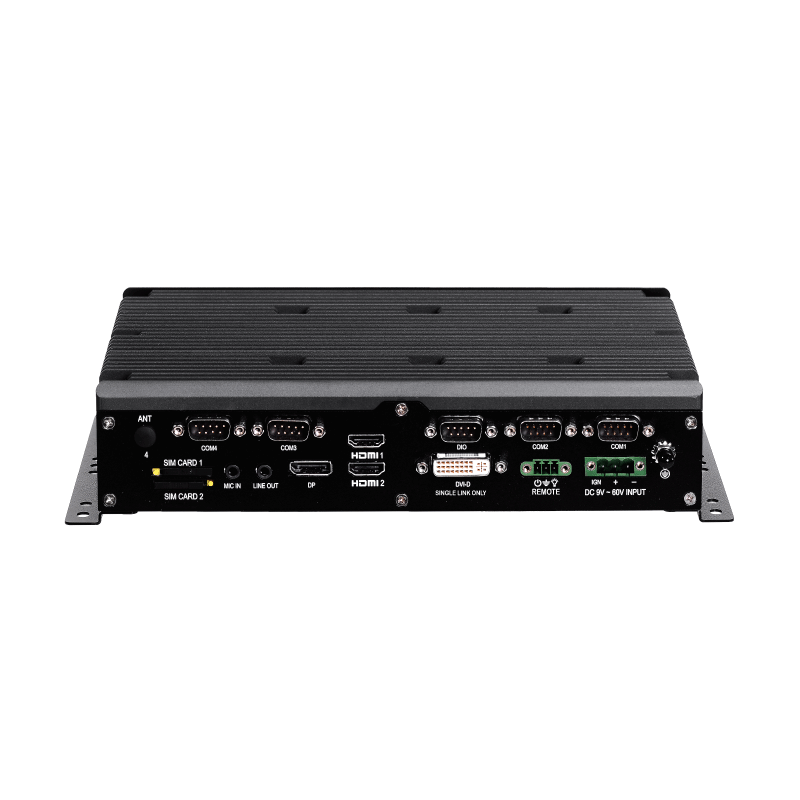
• 2 x HDMI, 1 x DP, 1 x DVI-D* (Supports 4 Independent Display)
*Single-Link cable only
• 2 x mPCIe
*One is shared with M.2 Key B
• 1 x M.2 2230 Key E, 2 x M.2 3042/52 Key B
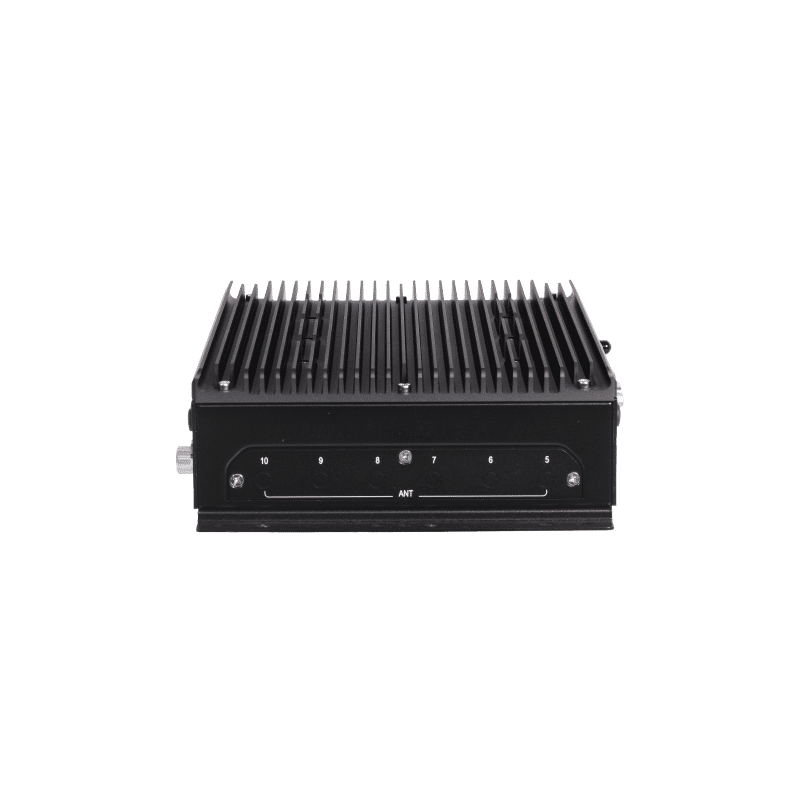
• 10 x Pre-cut Holes for External SMA Antenna
• 2 x SIM Card Sockets Supported Onboard with Eject
• 2 x 2.5″ Drive Bay for SATA Type HDD/SSD Support RAID 0,1
• 1 x M.2 2280 Key M for NVMe SSD
• Windows 10 IoT LTSC (64-bit), Windows 11 IoT (64-bit)
• Linux Ubuntu 20.04.6 LTS (64-bit), 22.04 LTS (64-bit)
• Intel® Iris® Xe Graphics / Intel® UHD Graphics
• Max Resolution (HDMI® 2.0b): 4096 x 2304@60Hz
• Max Resolution (DP): 4096 x 2304@60Hz
• -40°~ 70°C, ambient w/ 0.6m/s airflow
Patent No. M448011-Thermal Cooling
• -40° ~ 85°C
• 10% RH – 90% RH (non-condensing)
• IEC60068-2-64, random, 2.5G@5~500Hz, 1hr/axis
• MIL-STD-810G, Method 514.6, Procedure I, Cat.4, Operating
• Operating: MIL-STD-810G, Method 514.6, Procedure I, Trucks and semi-trailers 15G (11ms with SSD)
• CE, FCC Class A, E-Mark, EN50155, EN45545-2 (R25)
• 9~60 VDC Input
*24 ~ 60 VDC Input for VBOX-3630P-M12X
• Automatics Recovery Short Circuit Protection
• Power Ignition for Vehicles
• Power off Delay Time Setting by Software
• Optional Battery Kit for 10 Mins Operating (Oparting Temp. 0~60°C)
*UPS backup time varies depending on actual overall system power consumption.
*Patent No.: M447854 – Build-in Battery
• Aluminum Alloy
• Wall-mount
• 2,500g (Barebone)
• 250(L) x 165(W) x 55(H) mm
• VBOX-3630x-yyyy-zz (x=P=w/PoE, yyyy= M12X=M12 x-code for LAN ports, zz=i7=i7-1185G7E, zz=i5=i5-1145G7E, zz=i3=i3-1115G4E, zz=C1=6305E)
• Intel® 11th Gen Core i7-1185G7E CPU with 4 x GbE LAN On-Board Computer
• Made in Taiwan
• DDR4 SO-DIMM 3200 8GB~32GB (-40~85°C)
• 2.5 inch SATA SSD TLC 64GB~1TB (-40~85°C)
• M.2 2280 NVMe 256GB~1TB TLC (-40~85°C)
• M.2 2230 Wi-Fi 6E + Bluetooth 5.2 Module
• M.2 3042/52 5G/LTE Modem
• mPCle GPS Module
• mPCIe CAN Bus Module
• BAT-3630 Kit, 2,350mAh 3S1P Battery Kit (0~60°C)
Learn how the SINTRONES VBOX-3630 helped Madrid emergency services maintain reliable onboard communications, continuous fleet connectivity, and uninterrupted access to mission-critical information. Case Overview Industry Emergency Services Application Emergency Fleet Connectivity Location Madrid, Spain Challenge Reliable onboard communications in high-mobility emergency vehicles Solution VBOX-3630 rugged onboard computer Outcome Stable fleet connectivity, reliable dispatch communications, and continuous access to mission-critical information Emergency Response Depends on Reliable Connectivity Every emergency response begins with information. Whether dispatching an ambulance, coordinating fire services, or directing law enforcement, emergency vehicles must remain continuously connected to the control center while accessing navigation, incident updates, and operational data in real time. As cities become increasingly connected, emergency fleets are expected to exchange more information than ever before. However, maintaining reliable communications in high-mobility environments remains a significant challenge. Frequent engine starts, unstable vehicle power, continuous vibration, and changing network conditions can all interrupt onboard systems, reducing operational efficiency when every second counts. For emergency service operators, dependable onboard computing is no longer simply an IT requirement—it has become a critical component of public safety. Operational Challenges for Emergency Vehicle Systems A leading emergency service operator in Madrid planned to upgrade its fleet communication infrastructure by integrating dispatch terminals and high-precision GPS tracking across its emergency vehicles. The deployment required a computing platform capable of supporting continuous mobile operations while maintaining reliable access to mission-critical information throughout daily emergency response. Key operational requirements included: Reliable communication between vehicles and the dispatch center Stable onboard computing during continuous vehicle operation Real-time access to dispatch information and navigation Support for wireless communication and GPS positioning Reliable operation despite vibration, temperature variation, and vehicle power fluctuations Why Conventional Vehicle Computers Fall...
Read more