

Why Intel® Twin Lake Processors? The New Generation for Industrial Edge Computing
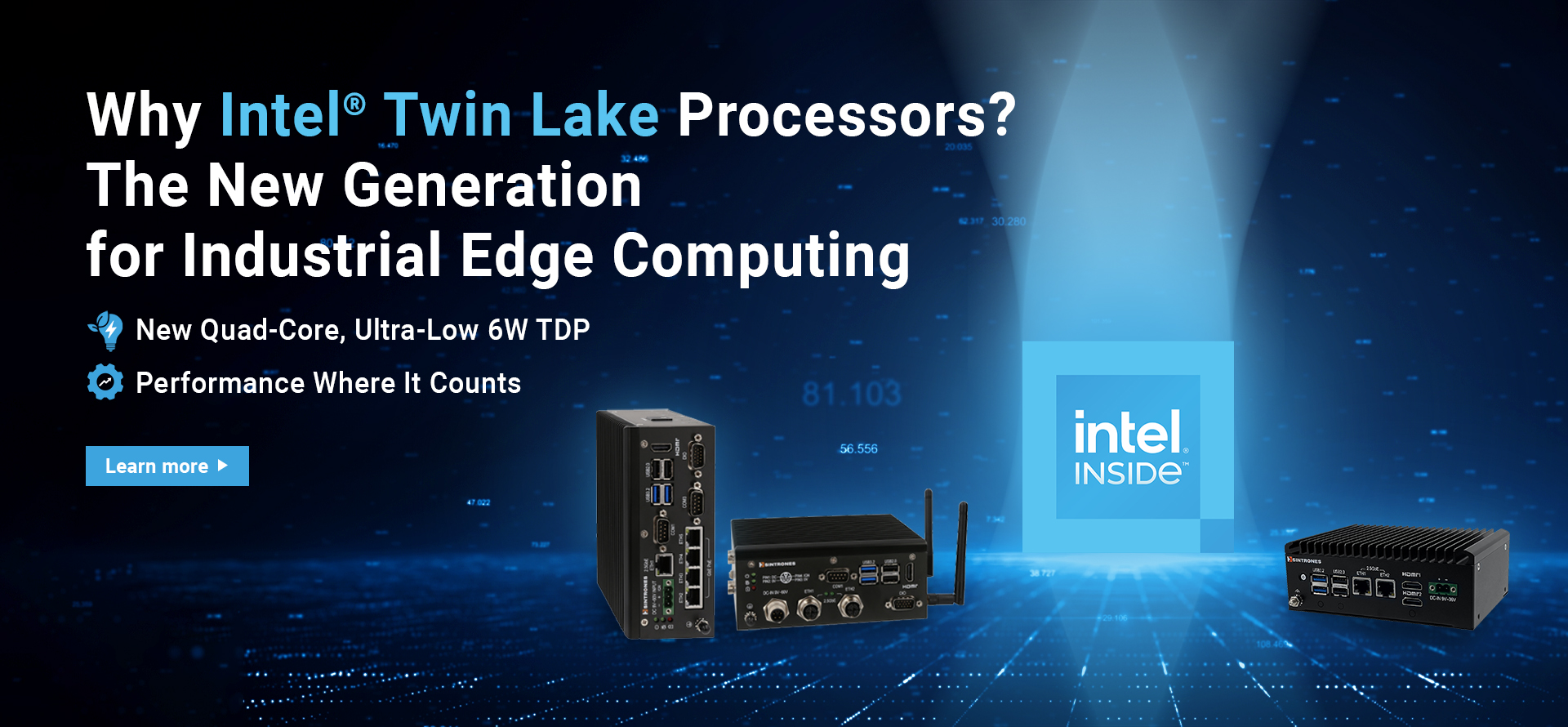
Are you seeking a reliable embedded system that delivers high performance with low power consumption at a budget-friendly cost? The SINTRONES embedded system — powered by the Intel® Twin Lake processor, the latest generation of Intel’s Processor N-series — is a choice you’ll never regret.
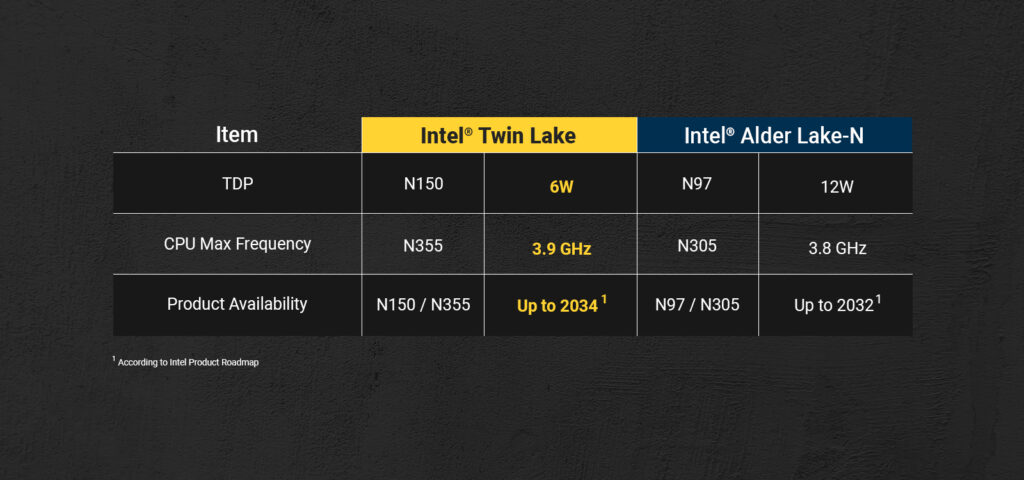
As the successor to the Alder Lake-N lineup, the Twin Lake family introduces two new CPUs: a Quad-core model optimized for ultra-low power consumption and an Octa-core model designed for enhanced performance. These future-ready processors also ensure product availability for up to 10 years, through 2034 — making them ideal for industrial applications that demand extended lifecycle and long-term support.
New Quad-Cores, Ultra-Low 6W TDP
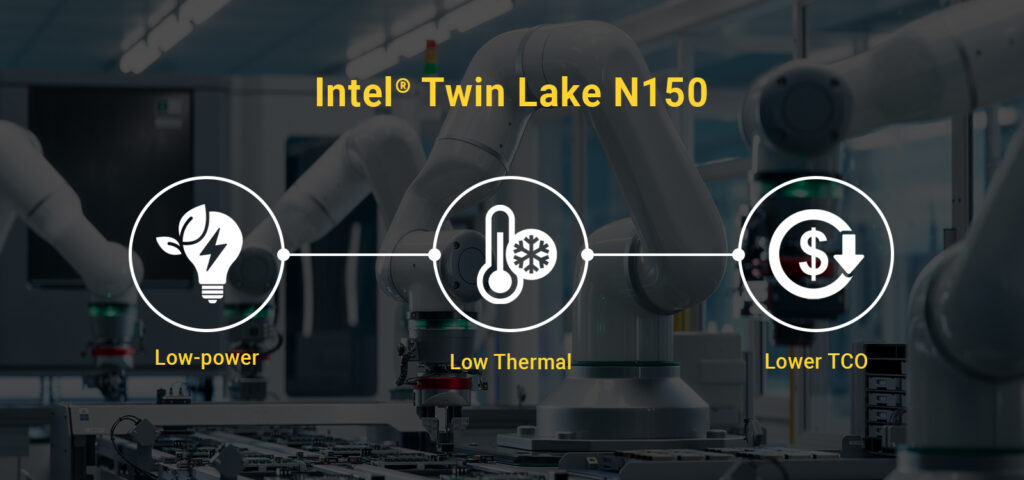
Built on four efficient cores (E-cores), the Twin Lake N150 achieves superior performance per watt with a thermal design power (TDP) of only 6W — 50% lower than its predecessor, the Alder Lake N97. This low-power design is especially suitable for large-scale system deployments in factory and retail environments. By cutting CPU power consumption in half, organizations can significantly reduce energy usage, lowering total cost of ownership (TCO) over time.
Performance Where It Counts
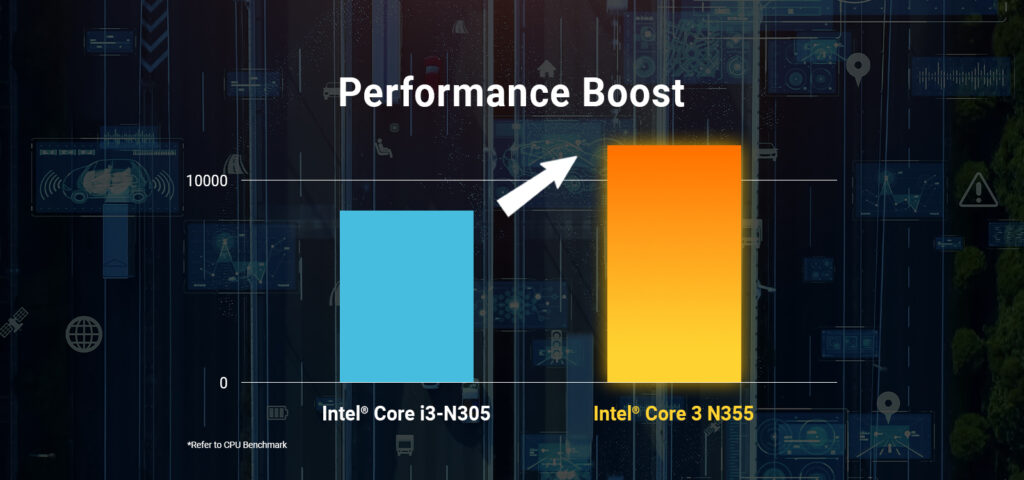
For heavier workloads, the Intel® Core™ 3 Processor N355 provides exceptional value with a max turbo frequency of 3.9GHz and GPU clock speeds up to 1.35GHz. The Twin Lake Octa-core CPU delivers a 10% boost in multi-threaded performance compared to the Alder Lake Core™ i3-N305, while maintaining the same efficient power profile. This performance uplift ensures greater efficiency and value without increasing energy consumption.
10-Year Product Longevity Lifecycle Support
Launched in early 2025—two years after Alder Lake-N—the Twin Lake series provides product lifecycle support until 2034. With long-term availability and consistent support, this evolution of Intel’s low-power CPU series is particularly suited for embedded and industrial applications that demand system longevity, continuous supply, and dependable service.
Key Takeaways
Intel® Twin-Lake processors deliver clear advantages over their predecessors — helping business decision-makers invest confidently in industrial PCs and embedded systems built for resilience and long-term stability. The following comparison highlights these advantages side by side.
SINTRONES: Ultra-Efficient Innovation
Leveraging the low-power design of Intel® Twin Lake CPUs, SINTRONES introduces two new industrial computer series: SBOX-2625 and VBOX-3132. These systems deliver ultra-efficient computing compared to edge computers based on Alder Lake-N, while also offering:
- Support for high-speed DDR5 4800 MT/s
- Reliable performance in harsh environments
- Wide DC power input and operating temperature ranges
- Vibration resistance and fanless operation
- Long lifecycles for energy-sensitive applications
- Ultra-compact size for limited space installation
SBOX-2625 vs. VBOX-3132: Which One Best Fits My Needs?
Designed for efficient edge computing, the SBOX-2625 and VBOX-3132 each address distinct challenges for specialized use cases.
SBOX-2625 — Ideal for IoT gateways, digital signage, and space-constrained control terminals, offering:
- Maximum Efficiency: Optimized for ultra-low-power, 24/7 operation.
- Space-Saving Design: Ultra-compact form factor for easy integration.
- Enterprise-Grade Security: Built-in hardware TPM safeguards critical edge data.
- Cost-Effective: A smart choice for large-scale, budget-sensitive deployments.
VBOX-3132 — An excellent solution for smart surveillance, fleet management, and railway applications, featuring:
- In-Vehicle Ready: Compliant with EN 50155 and E-Mark, including smart ignition control.
- Seamless Communication: Built-in CAN FD for real-time automotive communications.
- Power Resilience: Optional Backup Battery Unit (BBU) prevents data loss during unexpected outages.
- Integrated PoE: Simplifies IP camera and IoT sensor deployment
Together, these Twin Lake-powered embedded systems provide cost-effective, energy-efficient solutions for real-time, low-latency edge tasks — driving innovation across smart cities, intelligent transportation, and industrial automation.