In-Vehicle Rugged Computer
RBOX-1001-M12X Series

Intel Atom® x7835RE with 24-110VDC Galvanic Isolation Power Input Railway Computer

• Intel Atom® x7000RE Amston Lake Processor
• 24-110VDC Galvanic Isolation Power Input for Railway Application
• Compliant with Railway Regulation EN 50155
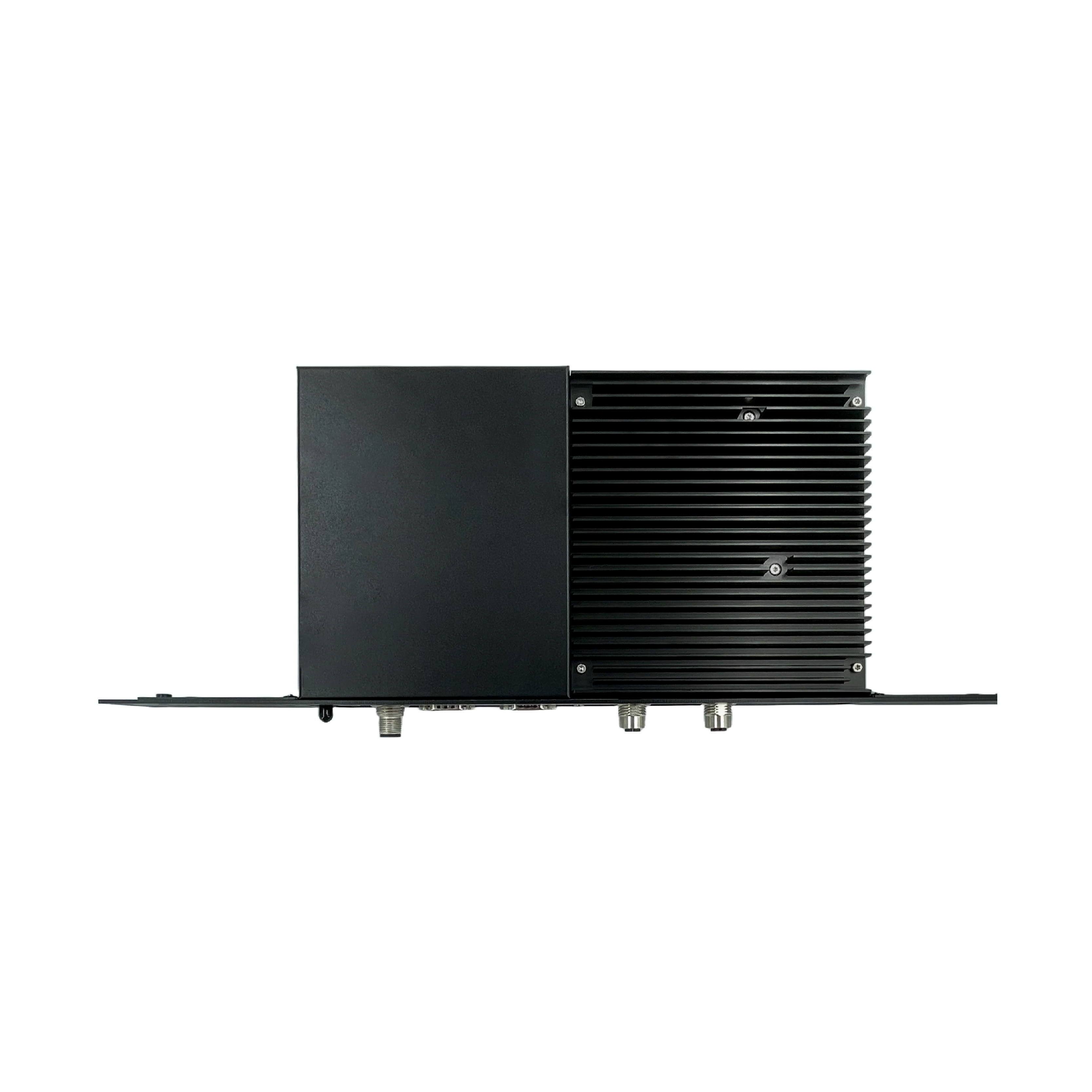
• Removable Cover for Easy Expansion and Maintenance
• 2 x 2.5GbE Supports Industrial Temperature Environment

Product Status: Available
CE FCC EN 50155 Wide-voltage Wide-temperature Fanless
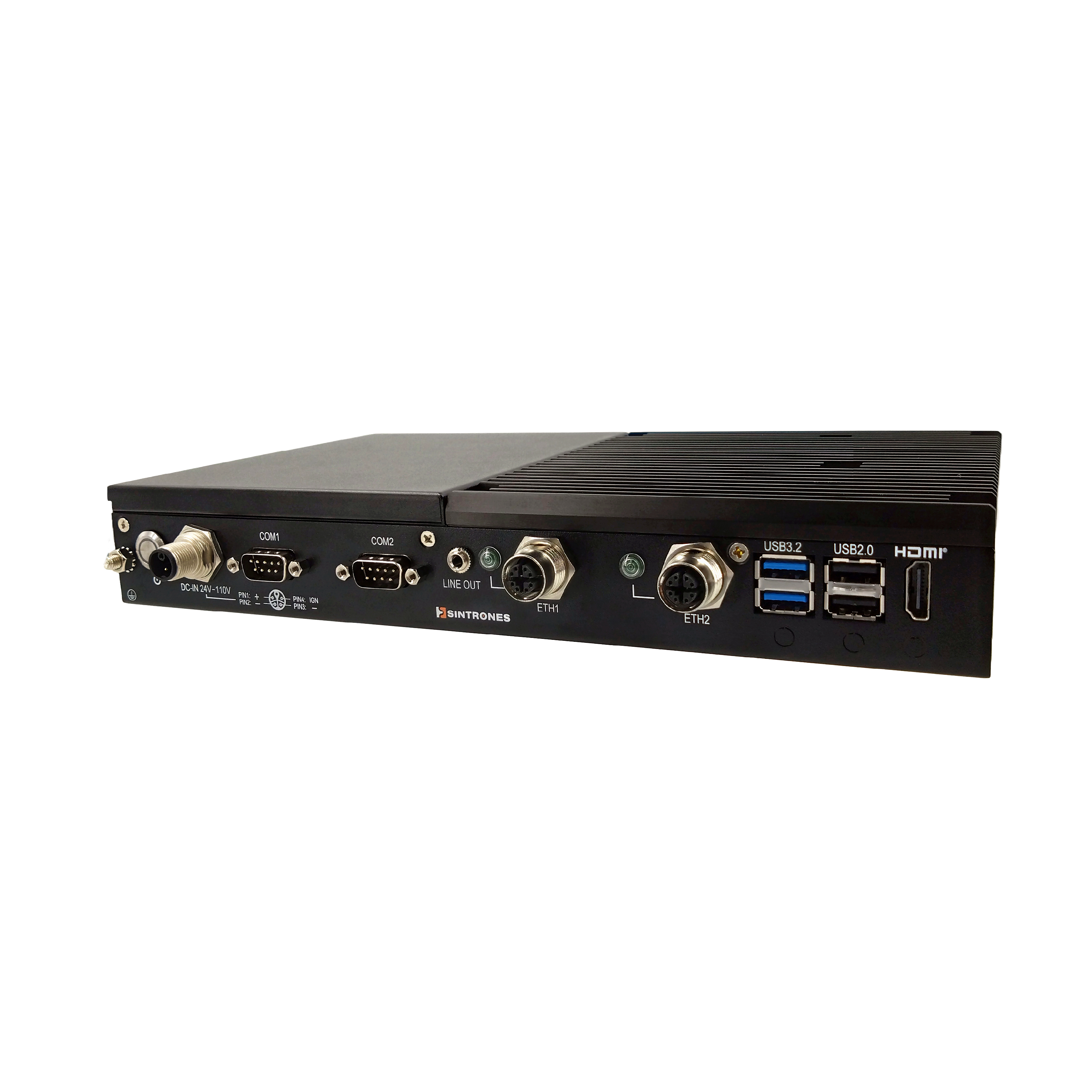
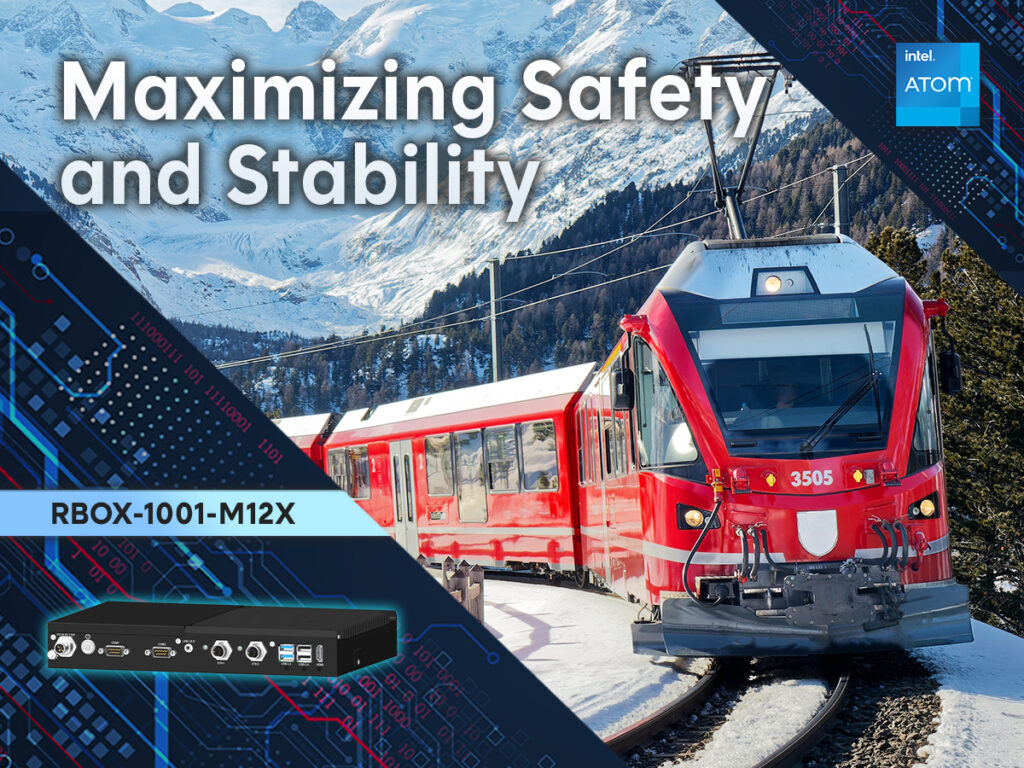
SINTRONES RBOX-1001-M12X EN 50155 certified railway computer with 1U rackmount PC design for mission-critical rolling stock infrastructure.

Slim 1U Architecture and Edge AI Efficiency for Evolving Railway Systems

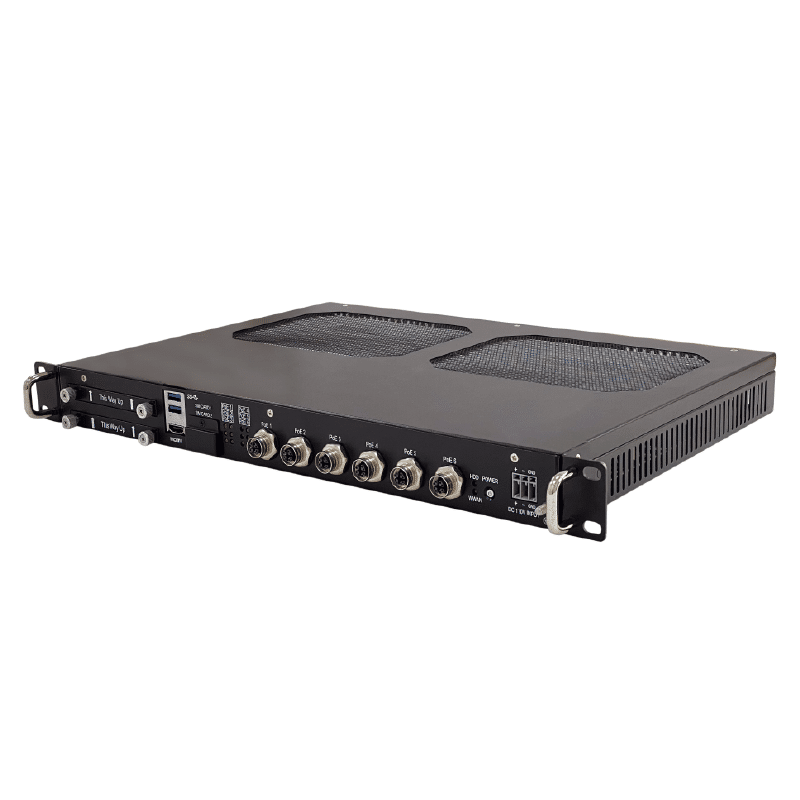
The RBOX-1001-M12X represents the next evolution in space-efficient railway computer design, featuring a compact 1U rackmount PC chassis under 44 mm in height. Powered by the Intel Atom® x7000RE industrial-grade processor, this system is engineered for high-reliability edge AI computing in space-constrained rolling stock and wayside control cabinets. To meet the rising demands for localized intelligence, it supports an optional Hailo AI accelerator via M.2 expansion, delivering up to 26 TOPS of AI performance for real-time video analytics and automated obstacle detection. This balanced architecture is complemented by dual 2.5GbE ports and DDR5 memory, ensuring efficient data throughput for mission-critical onboard applications.

Slim 1U rackmount PC RBOX-1001-M12X featuring Intel Atom processor and M.2 slots for Hailo AI accelerator to empower edge AI computing.
RBOX-1001-M12X rolling stock computer deployed in a railway control cabinet with M12 connectors and galvanic isolation for real-time edge AI analytics.

EN 50155 Certified Ruggedness and Galvanic Isolation for Mission-Critical Stability

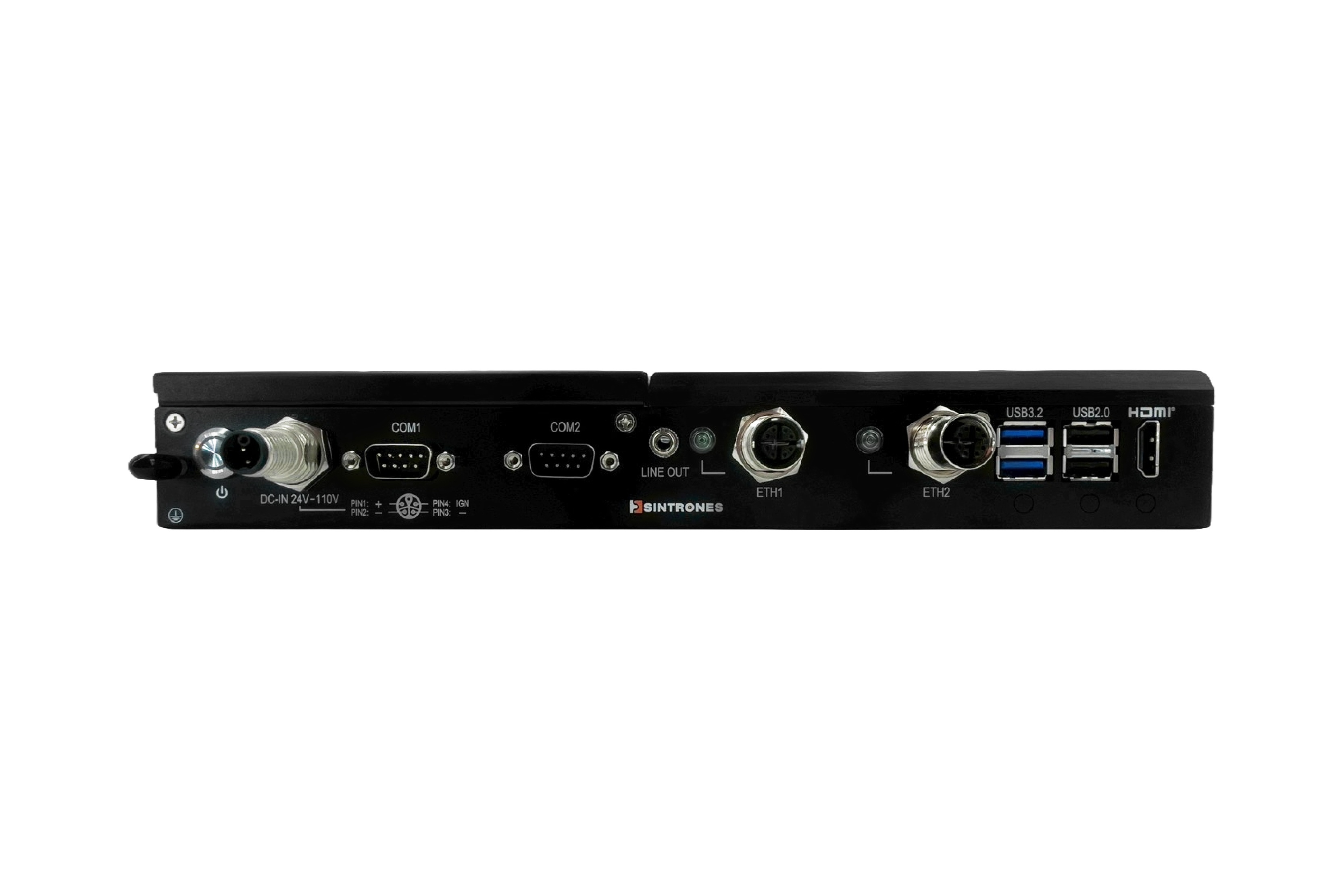
Built to endure the unrelenting stress of rolling stock environments, the RBOX-1001-M12X is a fully certified EN 50155 railway computer that also complies with MIL-STD-810H standards for elite shock and vibration resistance. For maximum electrical protection, the system features a built-in Galvanic Isolation power system supporting a wide DC 24V to 110V input range, shielding internal components from volatile voltage fluctuations common in railway power grids. The integration of vibration-proof M12 connectors for power and network uplinks ensures secure connectivity despite constant mechanical shock. Designed for thermal resilience, the RBOX-1001-M12X operates reliably between -40°C and 75°C, while its removable covers provide rapid access for maintenance, significantly reducing operational downtime in the field.

Enabling Real-Time Edge AI Across Diverse Industries

Edge AI is transforming how industries collect, analyze, and act on data in real time. By processing AI workloads directly where data is generated, organizations can reduce latency, improve operational efficiency, and enable faster decision-making without relying on cloud connectivity. From industrial automation and machine vision to autonomous mobility and intelligent transportation, SINTRONES rugged Edge AI computing platforms deliver the performance, reliability, and scalability required for mission-critical deployments. Discover how Edge AI is driving innovation across diverse industries and empowering businesses to bring AI closer to where it creates the greatest impact.

Technical FAQ

Q1: How do I choose a railway computer for rolling stock and wayside applications?

A: A railway computer should be selected based on power architecture, environmental requirements, connectivity, installation space, and workload. For rolling stock applications, EN 50155 certification, wide DC input with galvanic isolation, vibration-resistant connectors, and wide-temperature operation are particularly important. The RBOX-1001-M12X is EN 50155 certified and combines 24–110V DC galvanically isolated power input, M12 connectivity, and a compact 1U-ready design for deployment in onboard and wayside railway systems.

Q2: Why is galvanic isolation important for onboard railway computers?

A: Railway power networks can be exposed to voltage fluctuations, transients, and differences in ground potential between connected equipment. Galvanic isolation electrically separates the computer from the input power source, helping prevent ground loops and electrical disturbances from affecting internal electronics. The RBOX-1001-M12X supports a galvanically isolated 24–110V DC input, allowing it to integrate with a wide range of railway power systems while improving electrical robustness.

Q3: Can the RBOX-1001-M12X run Edge AI inference for railway applications?

A: Yes. For applications that require additional AI acceleration, one of the M.2 2280 slots can accommodate an optional Hailo AI accelerator delivering up to 26 TOPS. This enables localized AI inference for applications such as onboard video analytics, passenger safety monitoring, and railway infrastructure monitoring without continuously sending video or sensor data to the cloud. Actual AI performance depends on the accelerator configuration, AI model, framework, and workload.

Q4: How can the RBOX-1001-M12X support onboard video surveillance and data storage?

A: The system provides two M.2 2280 storage interfaces, allowing system integrators to separate operating system and application storage from high-capacity video or operational data storage. Combined with dual 2.5GbE M12 X-coded Ethernet interfaces, the platform can receive and process high-bandwidth network data while recording video or other mission-critical information locally. One M.2 2280 interface can alternatively be used for an AI accelerator when local inference is required.

Q5: How can the RBOX-1001-M12X integrate with railway networks, communication systems, and onboard devices?

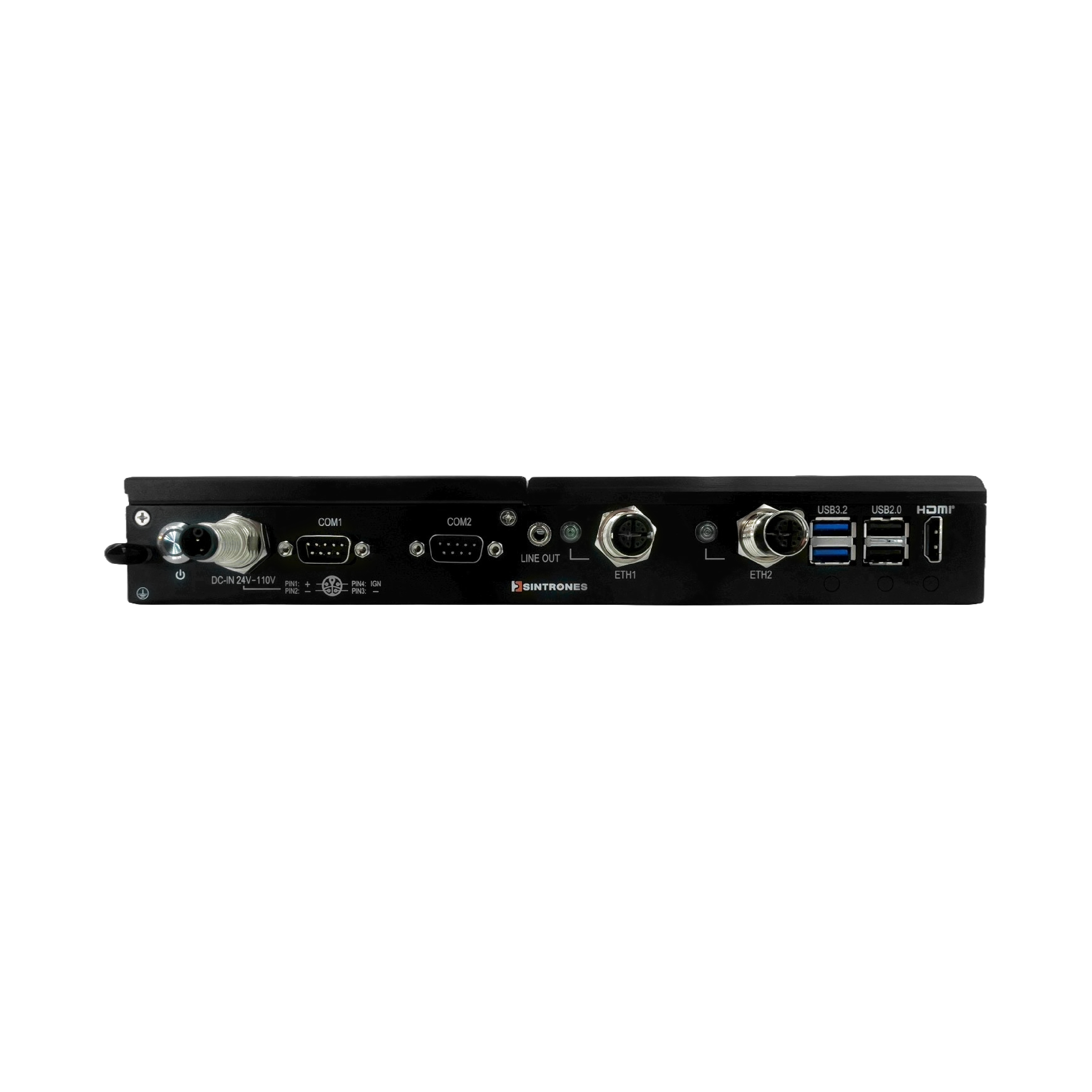
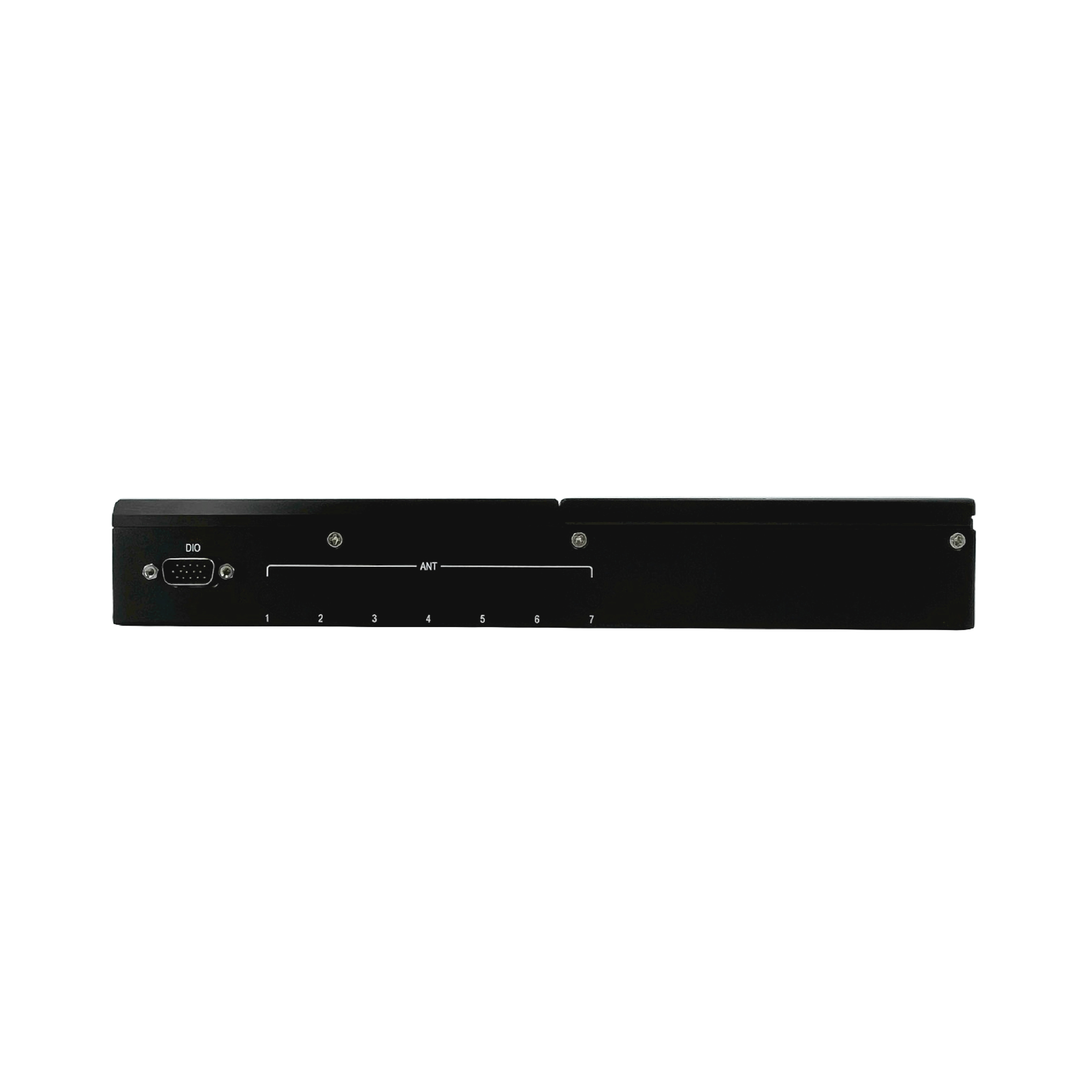
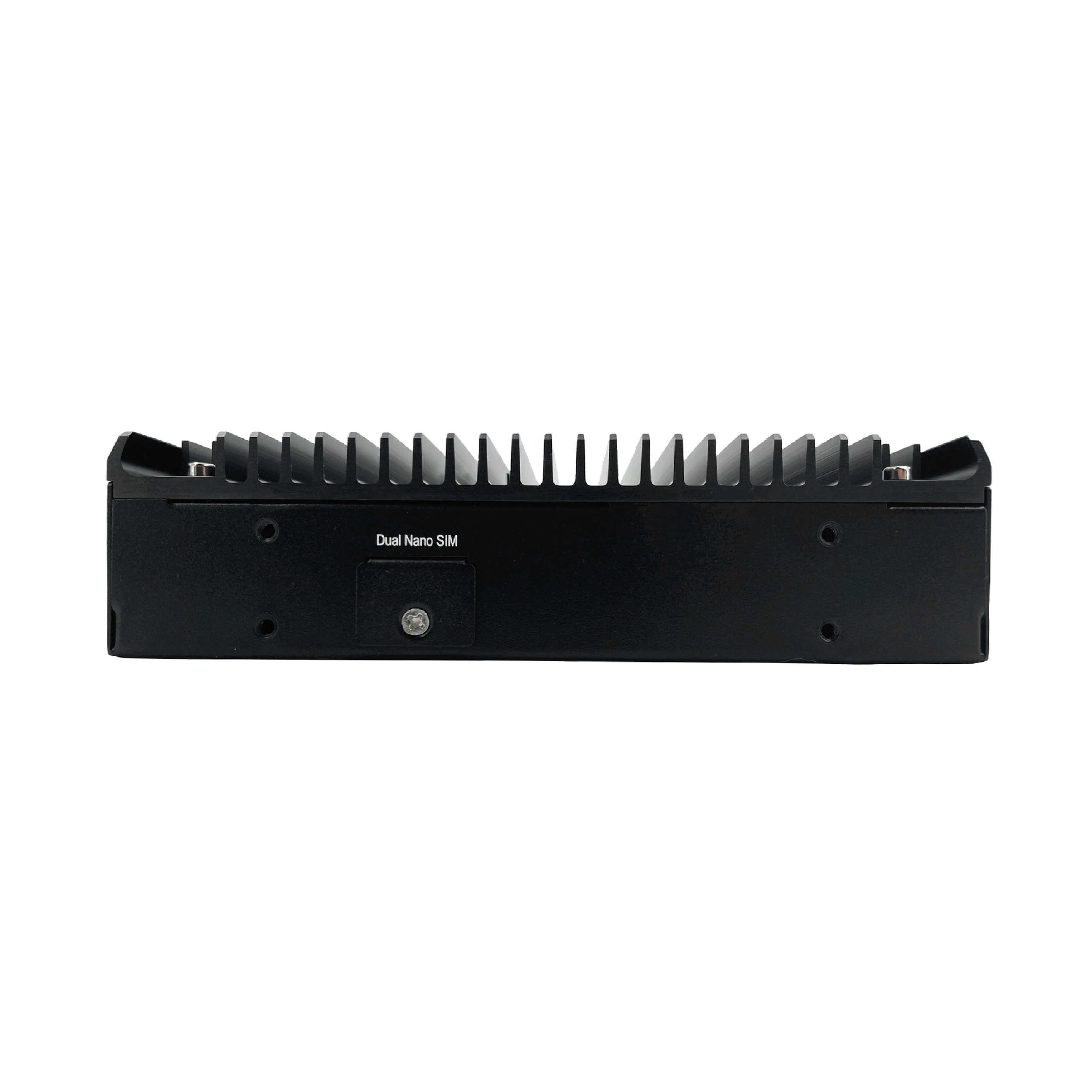
A: The RBOX-1001-M12X provides dual 2.5GbE through M12 X-coded connectors, RS-232/422/485, digital I/O, USB, and internal expansion for wireless connectivity. M.2 expansion supports WWAN with dual Nano SIM, Wi-Fi/Bluetooth, and optional GNSS configurations, allowing system integrators to connect onboard networks, communication equipment, positioning systems, sensors, and peripheral devices within a single railway computing platform.


Processing