

Solutions

Autonomous Cars

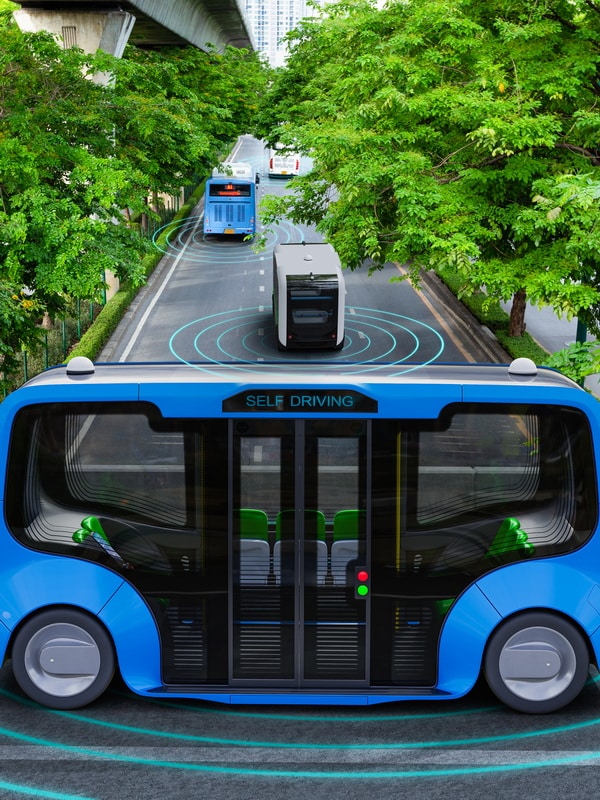
Autonomous Cars are reshaping global transportation trends, with rapid advancements in self-driving passenger vehicles and the growing adoption of mobility-as-a-service (MaaS) fleet models. As Autonomous Cars continue to evolve, fundamental technologies such as sensing and identification, high-precision mapping, vehicle positioning, decision-making control, and chassis-by-wire systems form the backbone of modern autonomous driving. Sensors including lidar, radar, and cameras function as the primary perception tools of Autonomous Cars, while advanced algorithms analyze sensor data to accurately detect obstacles and ensure real-time safety.

Short-term development of Autonomous Cars focuses on controlled environments, such as autonomous shuttles in amusement parks, allowing manufacturers to strengthen core technical capabilities. Mid-term plans expand the application of Autonomous Cars into specific operational fields and dedicated routes—such as bus-only lanes—that may partially overlap with open-road driving. The long-term objective is to enable fully autonomous driving for Autonomous Cars across unrestricted open-road environments.

The global market outlook for Autonomous Cars is extremely promising. By 2030, highly autonomous vehicles classified as SAE Level 4 are projected to represent 55.3% of the worldwide automotive market, with an estimated market value reaching USD 800 billion. This indicates strong momentum for the Autonomous Cars industry, progressing steadily from closed-area deployment to dedicated lanes and eventually full open-road operation.

Governments also play a crucial role in accelerating the rollout of Autonomous Cars by supporting key enabling technologies, regulatory frameworks, and innovative mobility business models aligned with local needs and real-world scenarios. As cities continue to pursue smart-city development and the demand for modern public transportation grows, the adoption of Autonomous Cars will become increasingly important.

SINTRONES actively contributes to this global transformation by delivering high-performance computing solutions designed for intelligent vehicles and next-generation autonomous systems. Through ongoing innovation and technical advancement, SINTRONES supports the long-term development and real-world implementation of Autonomous Cars, helping shape the future of safer, smarter, and more efficient mobility.

Obstacle Sensing Technology

The module configuration of a self-driving system mirrors how humans drive a vehicle. Humans first observe their surroundings with their eyes and then use their brains to decide the driving path. Finally, they operate the steering wheel, throttle, and brakes with their hands and feet to move the vehicle safely.

In a self-driving car, sensors such as lidar, radar, and cameras act as its “eyes.” These sensors collect raw data, which is then analyzed through algorithms to identify the type and location of surrounding obstacles.

Each type of sensor has different strengths. Cameras offer strong color and appearance recognition. Lidar excels at detecting the precise position and range of obstacles. Radar provides long-distance detection capability, especially for metal objects.

By combining the characteristics detected by each sensor, the system performs perception fusion. This process integrates all sensor data to calculate a complete understanding of the obstacles and environment around the autonomous vehicle.

Dynamic Positioning Technology

After the self-driving car analyzes environmental information, it must also determine its own location and destination. To achieve this, the system relies on a cooperative positioning module that receives GPS, IMU data, dynamic vehicle information, sensor-based environmental features, and high-precision localization inputs.

Using these data sources together with map information, the system calculates the vehicle’s current position and the driving trajectory toward its destination.

Next, the decision-making module takes inputs from the multi-sensor fusion system, the vehicle’s positioning data, and the planned trajectory from the cooperative positioning module. Based on this combined information, it performs dynamic decision-making for safe driving.

The resulting status and decisions of the self-driving system are then displayed through the human-machine interface and the backend management platform.

High-precision Map Technology

High-resolution maps are an essential component of self-driving technology. Compared with ordinary maps, they include far more detailed information such as road geometry, traffic signs, lane markings, obstacles, and other environmental features. They also require much higher geolocation accuracy.

This detailed map data forms the foundation for self-driving sensors and positioning systems. With high-precision maps, autonomous vehicles can achieve more accurate localization and improved environmental awareness.

Building high-precision maps involves integrating multiple technologies, including satellite surveying, ground-based mapping vehicles, laser scanning, and image processing. These methods work together to collect and structure comprehensive road information.

Since road conditions constantly change, high-precision maps must be updated and maintained in real time. Continuous updates help the system respond to construction zones, road changes, and unexpected traffic events.

Decision Control Technology

Decision-making control technology is a core element in enabling intelligent driving for autonomous vehicles. Using data from sensors and positioning systems, a self-driving car must perform real-time path planning, obstacle recognition, and traffic behavior prediction.

To achieve this, autonomous driving systems rely on artificial intelligence techniques such as deep learning, machine learning, and reinforcement learning. These technologies help the vehicle understand and predict dynamic changes in its surroundings, including other vehicles, pedestrians, and traffic signals.

Based on these predictions, the system must make adaptive decisions that fit different driving scenarios. It needs to continuously choose safe and appropriate control actions as the environment changes.

Decision-making control technology must also balance safety and performance. Self-driving cars are required to follow traffic rules, avoid hazards, and respond correctly to emergencies.

At the same time, they must adopt efficient driving strategies—minimizing travel time, improving energy efficiency, and ensuring smooth operation.

Human-computer Interaction Technology

As a self-driving vehicle, an autonomous car must interact effectively and communicate smoothly with passengers or users. Human–computer interaction technologies make this possible through tools such as voice commands, gesture recognition, facial recognition, and touch interfaces.

These interaction methods allow passengers to conveniently operate the self-driving car and access its functions. Beyond basic control, human–computer interaction also includes the design of interior infotainment systems and passenger safety monitoring features.

A self-driving car must provide a rich set of entertainment and information services while maintaining passenger safety and comfort. These technologies ensure that the riding experience is both engaging and secure.

Security and Privacy Technologies

The development of self-driving car technology must pay attention to safety and privacy protection. Self-driving cars need reliable security mechanisms to prevent the system from being hacked or maliciously interfered with. This includes securing the vehicle’s communications and control systems and ensuring that the vehicle’s data and operation are not tampered with or tampered with by unauthorized persons. At the same time, self-driving cars also need to protect the privacy of passengers and pedestrians. Self-driving cars usually collect and process a large amount of sensing data and location information, so strict privacy protection policies and technical measures must be formulated to ensure the security and confidentiality of personal data.


SINTRONES’ high-performance computer system provides several vital details and functions for autonomous driving and unmanned vehicle applications, including:


  • Powerful computing capability: SINTRONES adopts high-performance processors and graphics cards from Intel and NVIDIA. These processors have powerful computing capabilities and can handle complex data calculations and intelligent algorithms to achieve efficient autonomous driving functions. The computer system of SINTRONES has high-performance processors and graphics cards, which can handle massive data and complex computing tasks. It can process and analyze data from multiple sensors in real time and make quick decisions and reactions. This is critical for an autonomous driving system, as it needs to acquire data from various sensors (such as radar, camera, lidar, etc.) in real-time for object detection, route planning, decision-making, and more.


  • Wireless communication module: The system integrates various wireless communication modules, including 4G/5G, Wi-Fi, and Bluetooth. These communication modules enable high-speed data transmission and communication, supporting the connection between unmanned vehicles and other devices, infrastructure, and cloud systems.


  • Power noise and interference protection: The system uses a remote power supply unit, serial ports, and input and output ports to protect the system from power noise and interference. These designs can reduce external power supply interference to the system and improve the stability and reliability of the system.


  • Broad voltage input and comprehensive temperature operation: The system has a wide voltage input range and can adapt to the power input requirements of different vehicles. In addition, the system also has a wide temperature operating range and can operate normally in extreme temperature environments to ensure system reliability and performance.


  • Fanless design: The system is designed as a fanless structure, eliminating the risk of fan noise and mechanical failure. This is very important for unmanned vehicle applications because the fanless design can reduce noise interference while improving the reliability and life of the system.


  • Multiple communication protocol support: the system supports multiple communication protocols, such as CAN, RS232, and RS485.


  • High scalability: The system has good scalability and can be configured and expanded according to application requirements. It supports connecting multiple external devices, such as camera lenses, radar, and optical radar, which can meet the needs of different application scenarios.


  • Low power consumption and high efficiency: SINTRONES’ computer system design is energy-efficient and efficient and can provide excellent computing performance under low power consumption. This is especially important for unmanned vehicle applications, extending battery life and increasing system runtime.


  • High reliability and security: SINTRONES’ high-efficiency computer system is designed with reliability and security in mind. It adopts strict hardware and software design standards to ensure system reliability and security. This computer system has protection mechanisms to prevent potential attacks and malfunctions. At the same time, it also has a fault tolerance capability, which can continue to operate or enter a safe mode in the event of a fault to ensure the safe operation of unmanned vehicles.


  • Real-time perception and decision-making: SINTRONES’ computer system can sense changes in the surrounding environment in real-time, including vehicles, pedestrians, traffic signs, etc., and make accurate decisions based on this information. It has advanced sensing technology and algorithms capable of visual recognition, path planning, and traffic coordination functions.


  • Software and hardware integration and optimization: SINTRONES regards software and hardware integration and optimization as one of the critical details. Hardware design and software development work together to achieve higher performance and efficiency. This integration and optimization can improve the system’s operating efficiency while simplifying the development and maintenance work.


  • High temperature and shock resistance: Autonomous driving and unmanned vehicle applications often face extreme environmental conditions, such as high temperature and vibration. The computer system of SINTRONES has high temperature and shock resistance and can operate normally in harsh environments to ensure the stability and reliability of the system.


  • High-speed data aggregation and communication interface: SINTRONES’ computer system has high-speed data aggregation and communication interface, which can realize efficient communication and data exchange with sensors, controllers, and other systems. This facilitates immediate sensor data collection, processing, and feedback to ensure the accuracy and safety of autonomous driving systems.


  • Machine learning and artificial intelligence support: SINTRONES’ computer system supports the execution and optimization of machine learning and artificial intelligence algorithms. This enables the system to learn and extract patterns from large amounts of data for intelligent decision-making and prediction, thereby improving the performance and autonomy of autonomous driving systems.
Processing